

NCERT Solutions for Class 7 Maths Ganita Prakash Part 2 Chapter 6 Constructions and Tilings provides detailed, step-by-step solutions to all the questions given in the NCERT Mathematics textbook. This chapter focuses on geometric constructions using a ruler and compass, including perpendicular bisectors, angle bisectors, parallel lines, regular hexagons, and decorative geometric patterns. It also introduces tiling and the arrangement of shapes without gaps or overlaps. These Class 7 Maths Solutions cover all the Figure it Out exercises and important in-text questions.
Class 7 Maths Part 2 Chapter 6 Constructions and Tilings NCERT Solutions
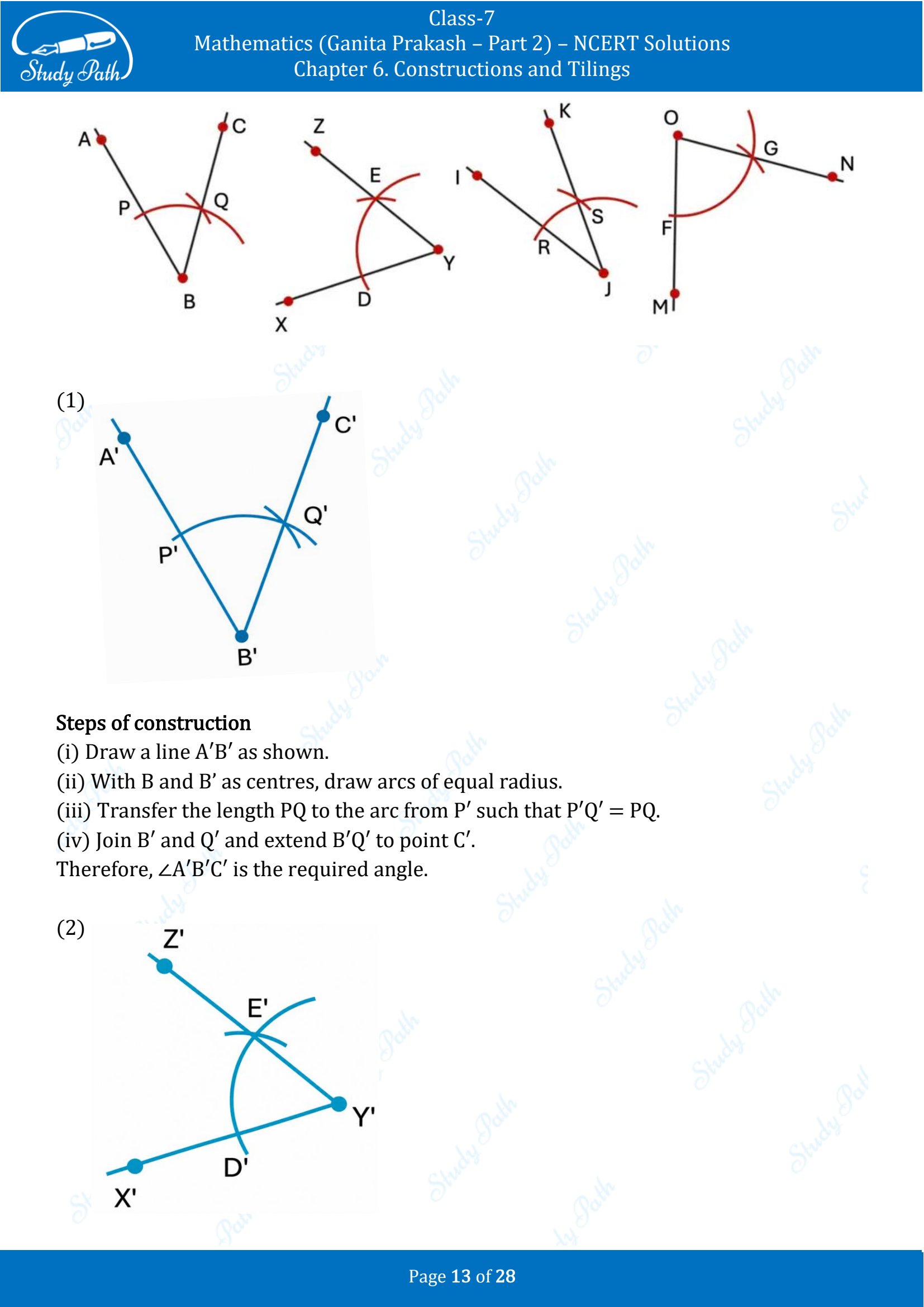
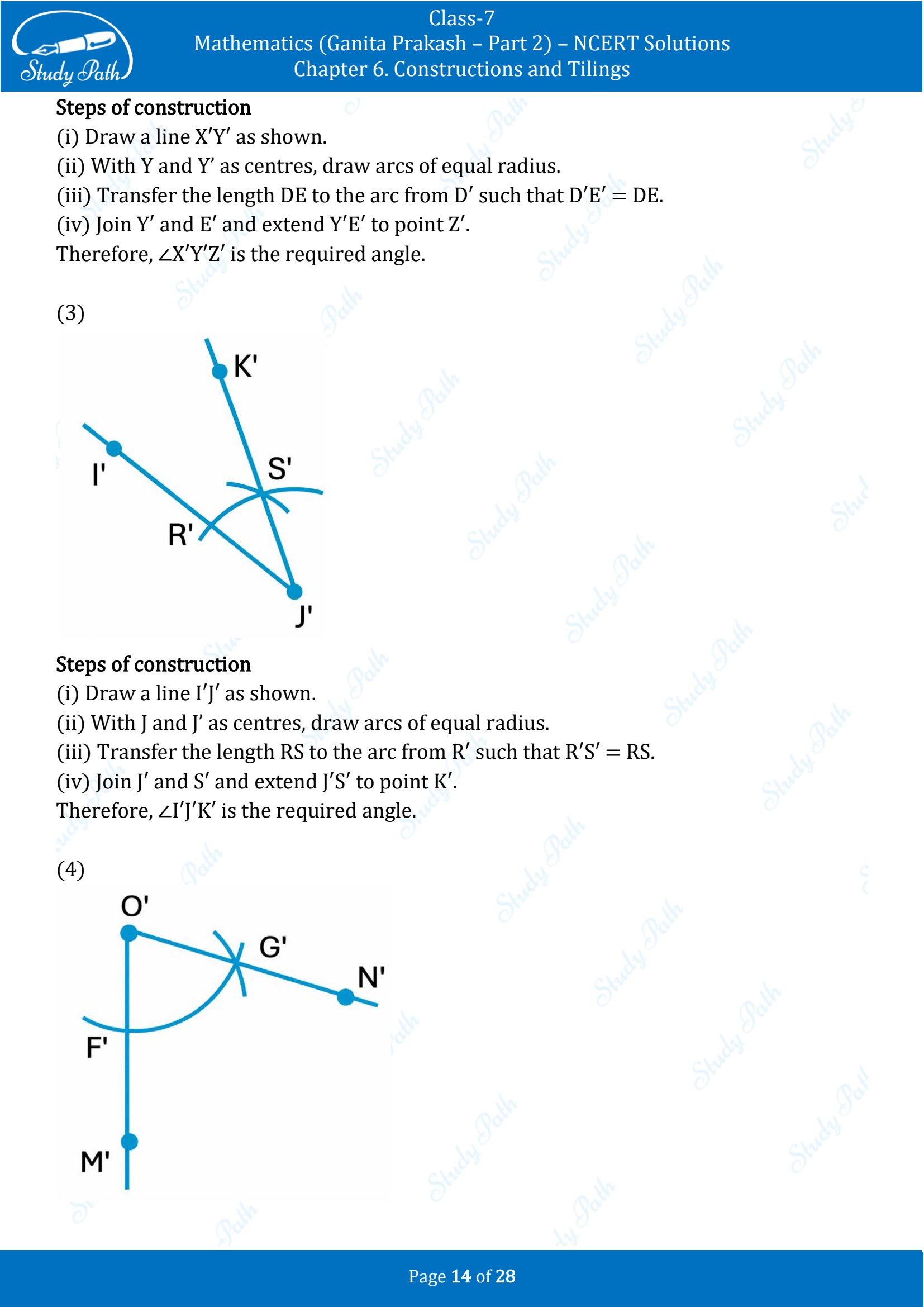
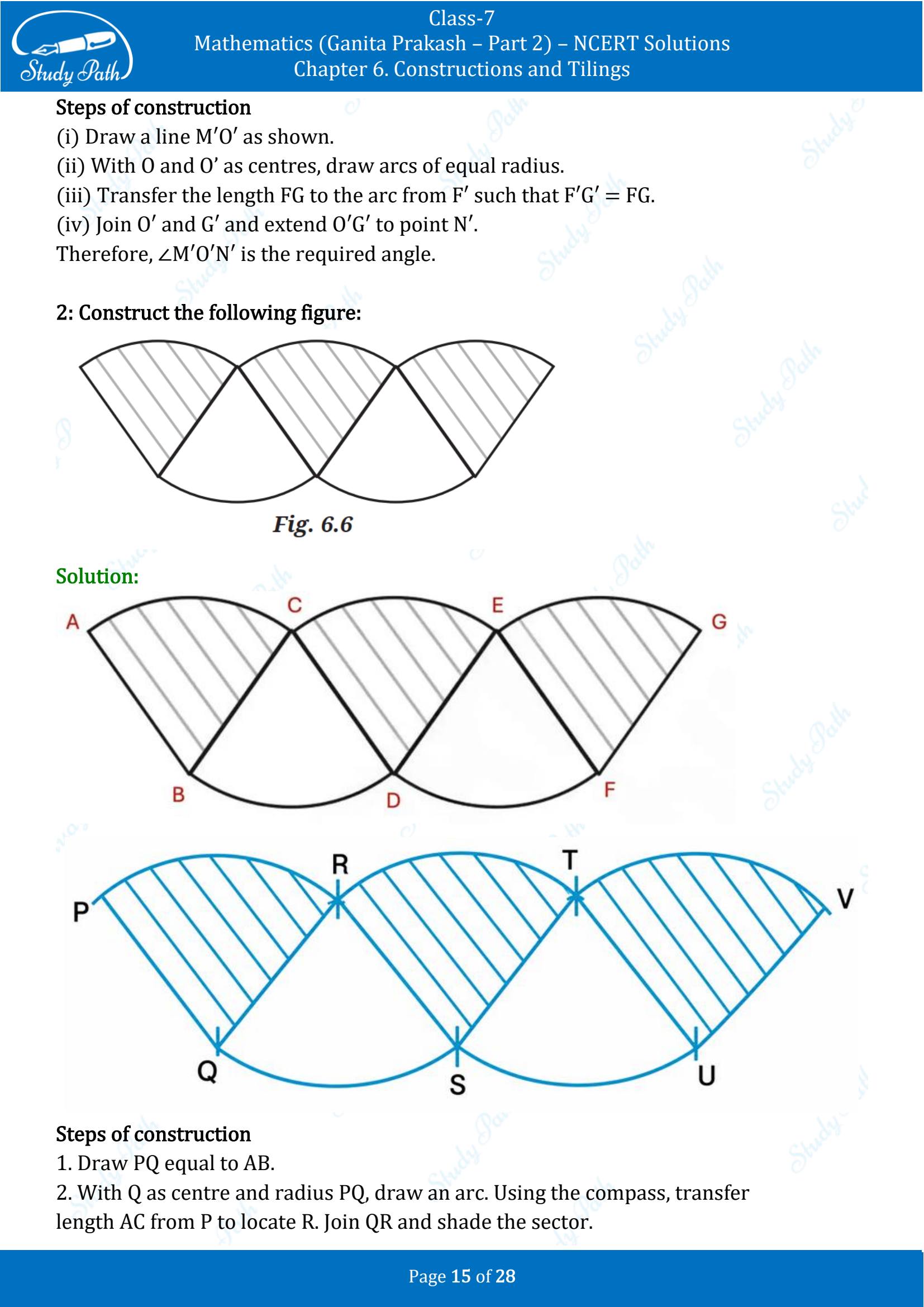
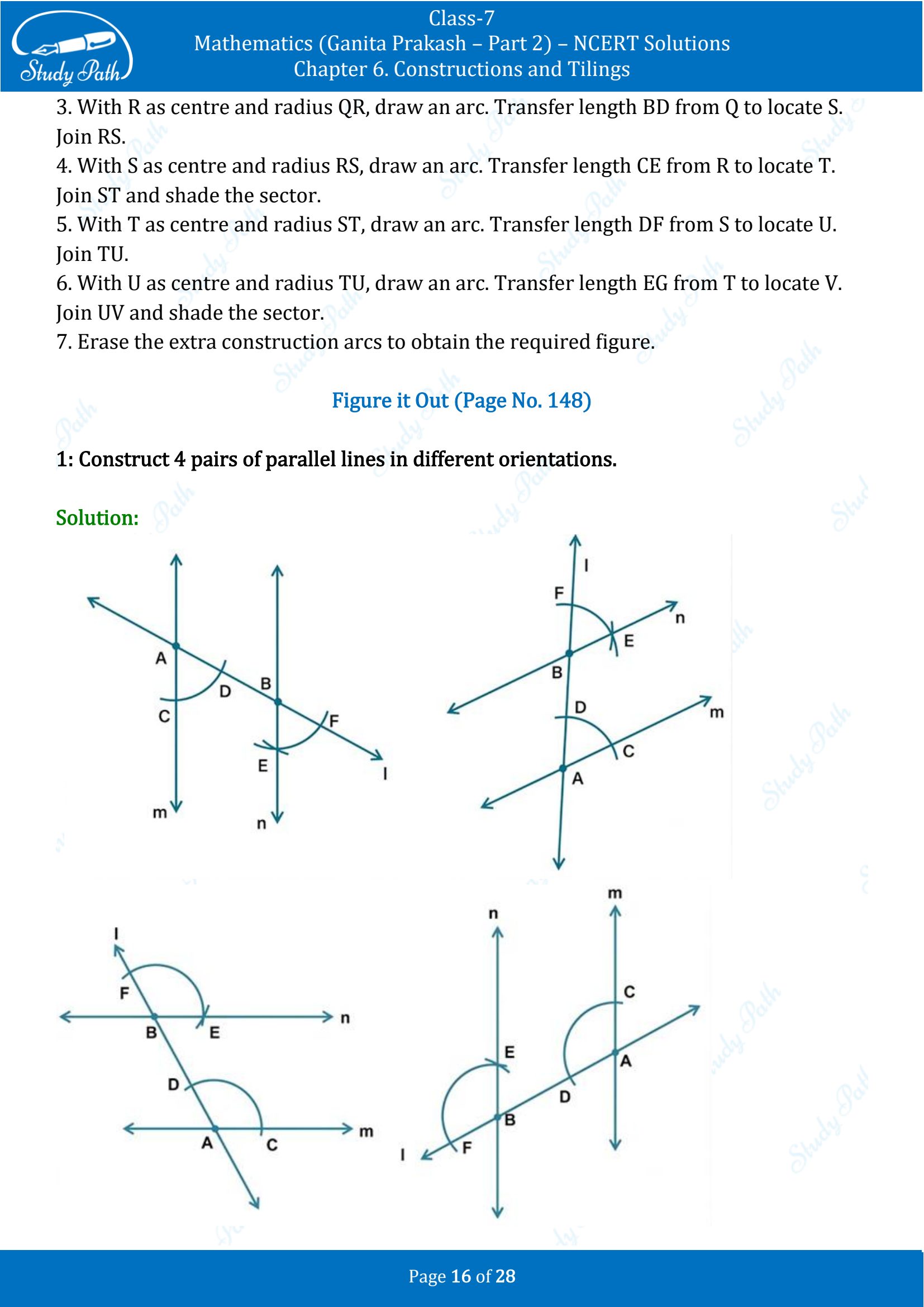
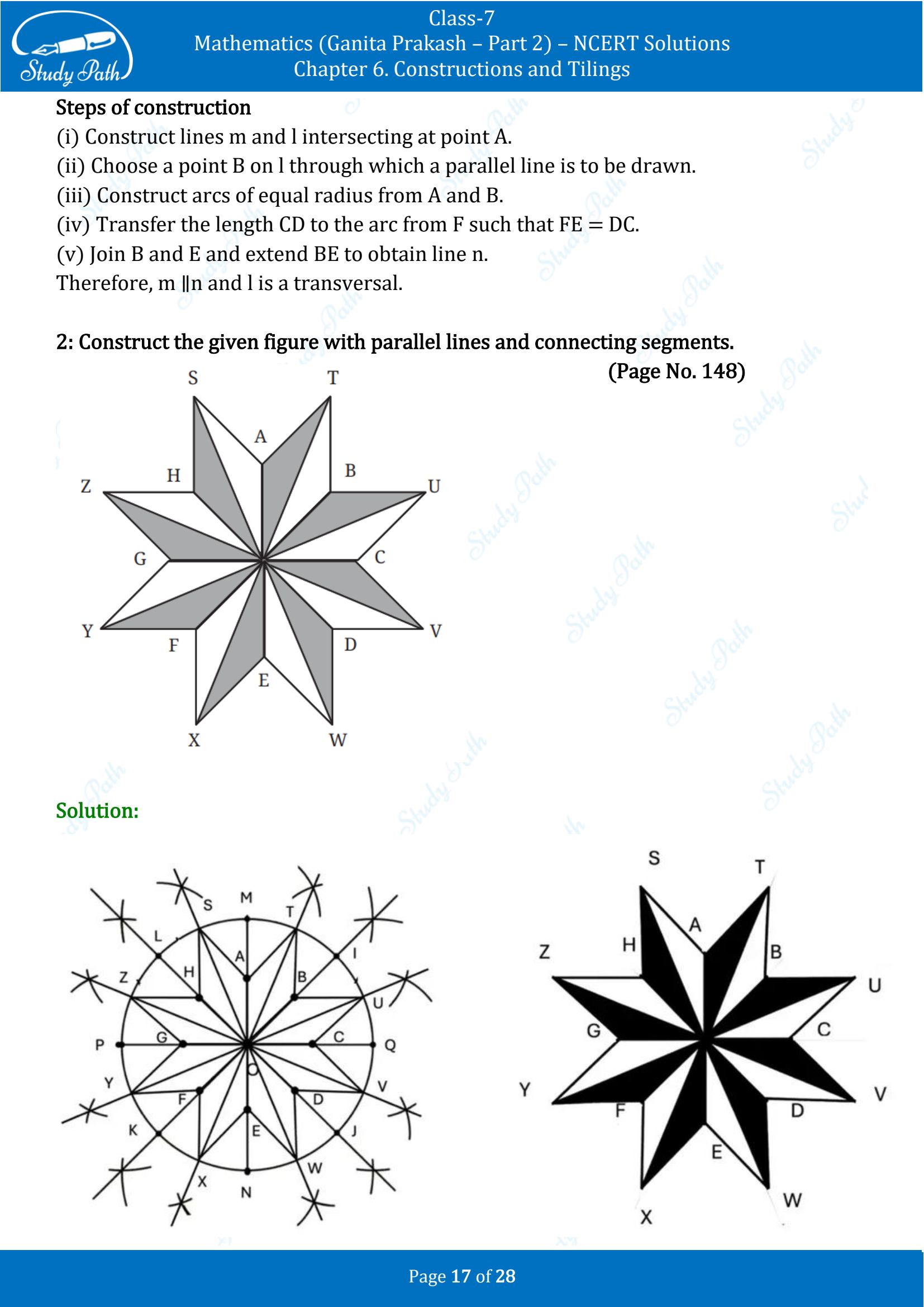
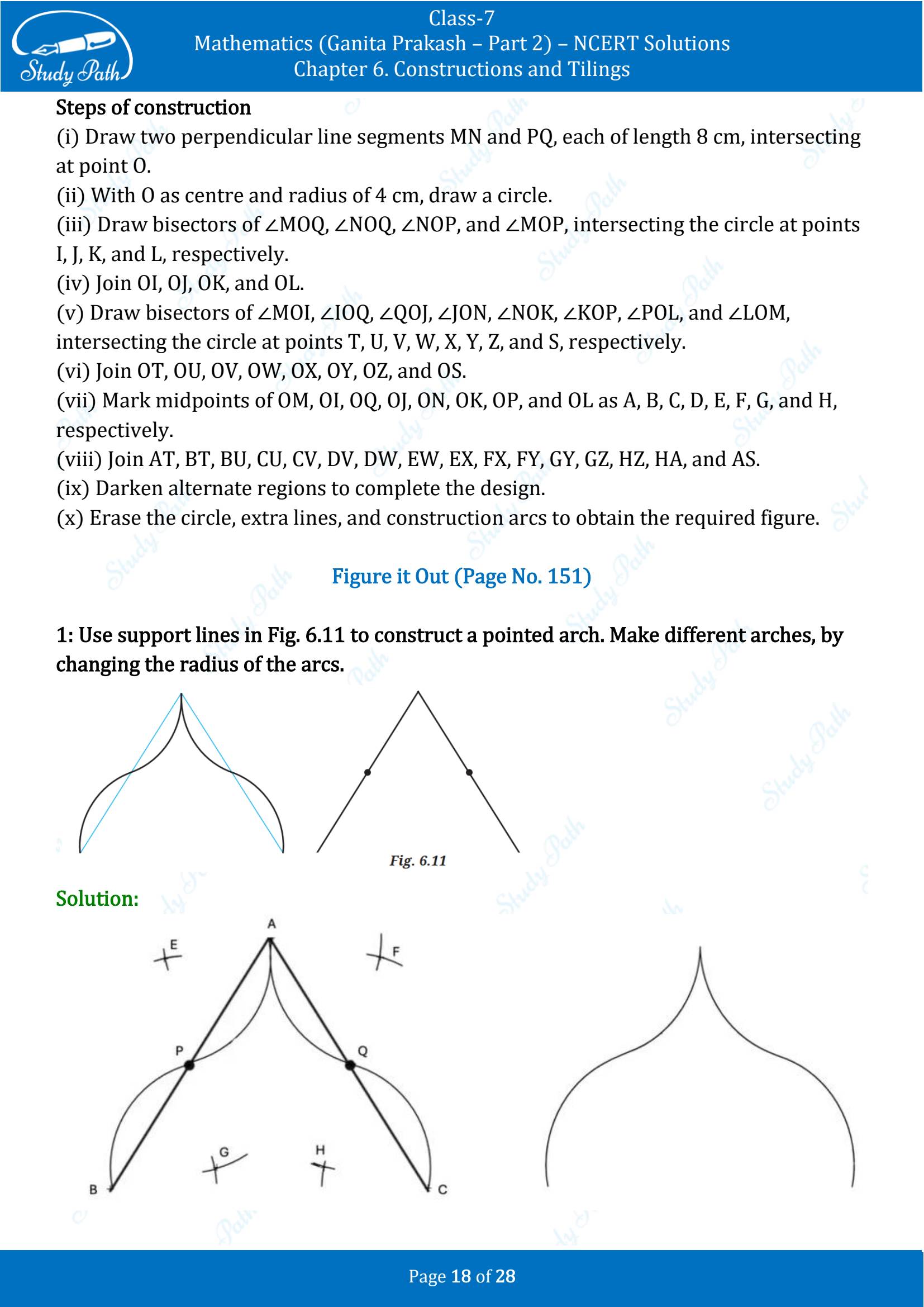
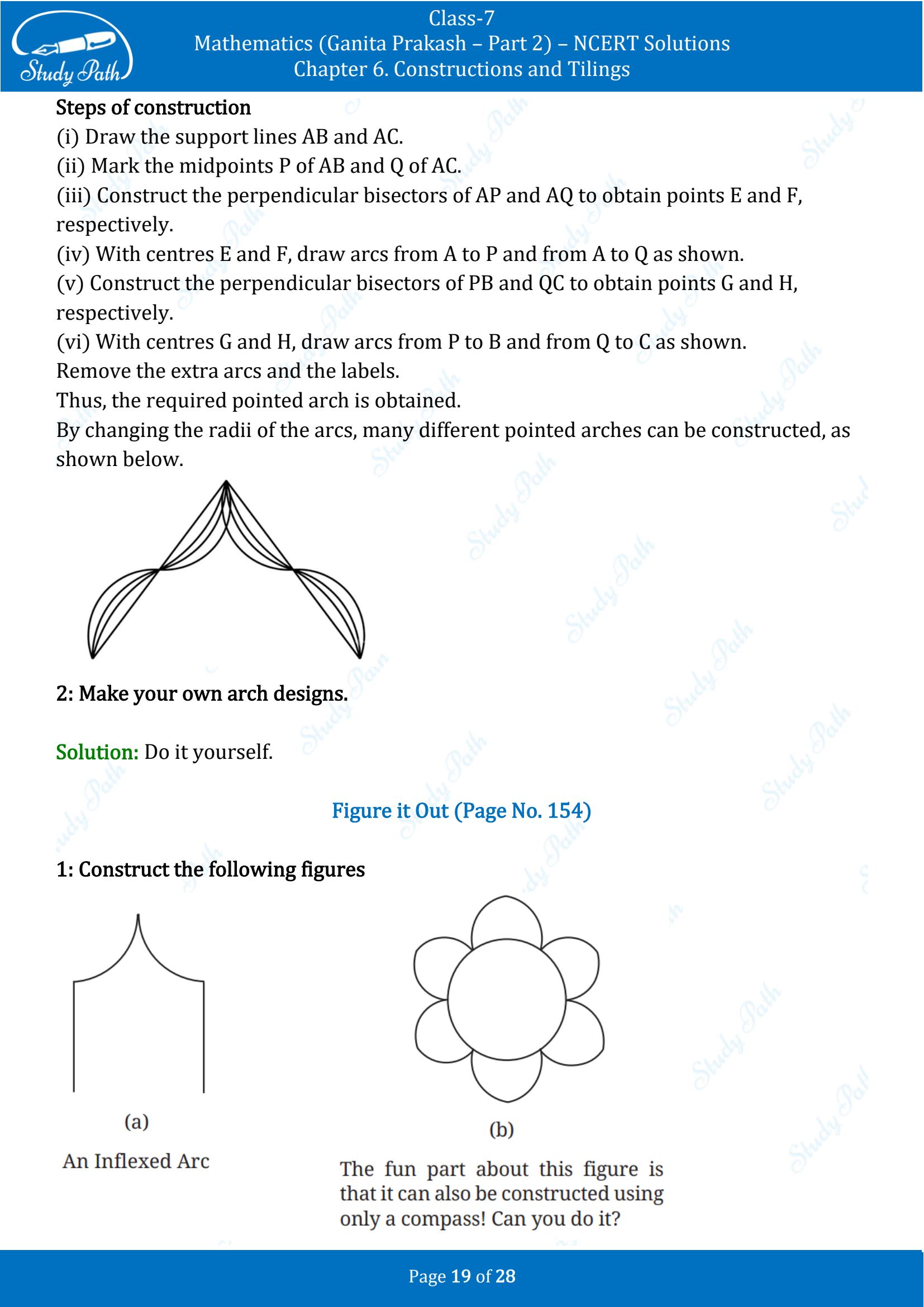
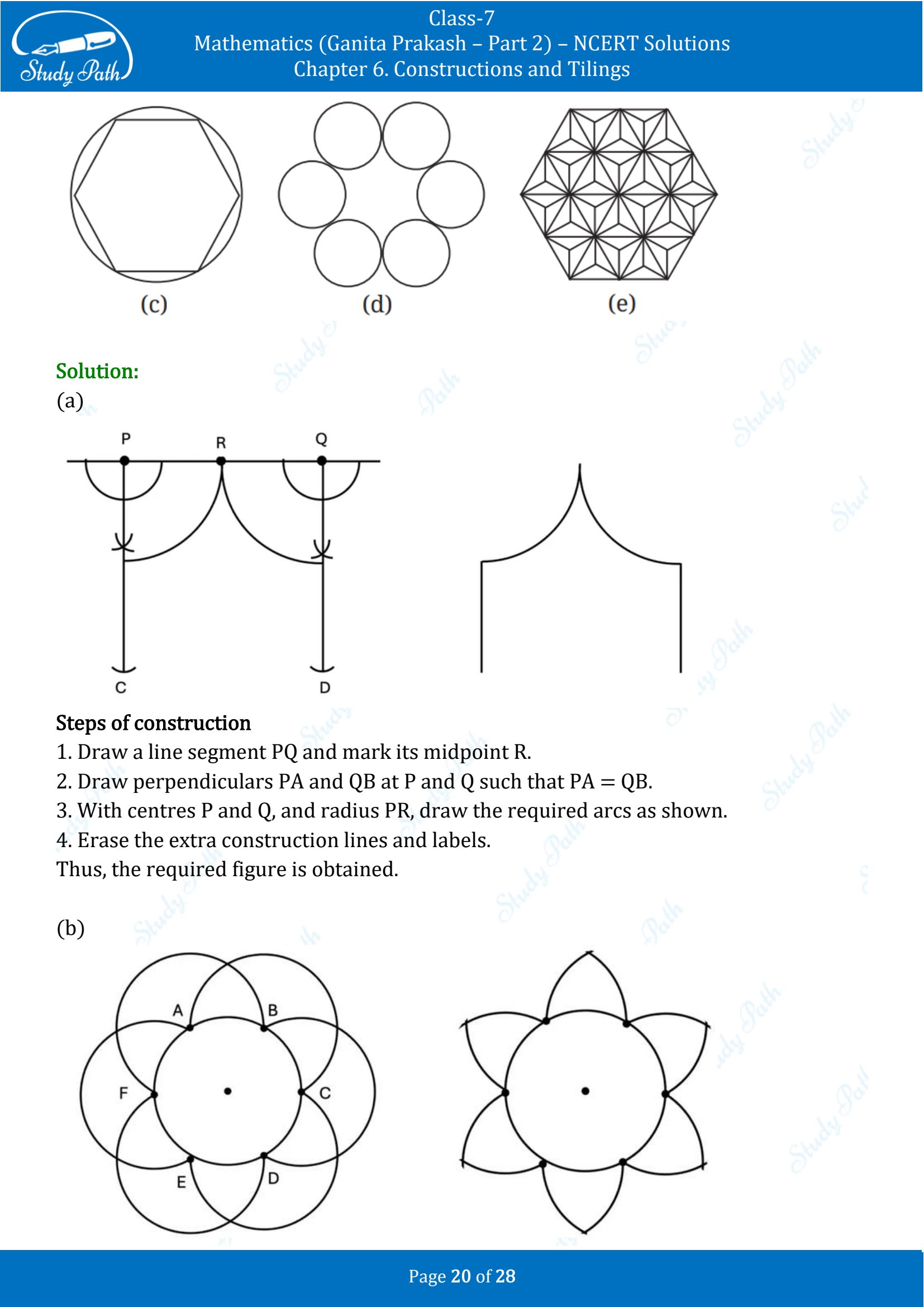
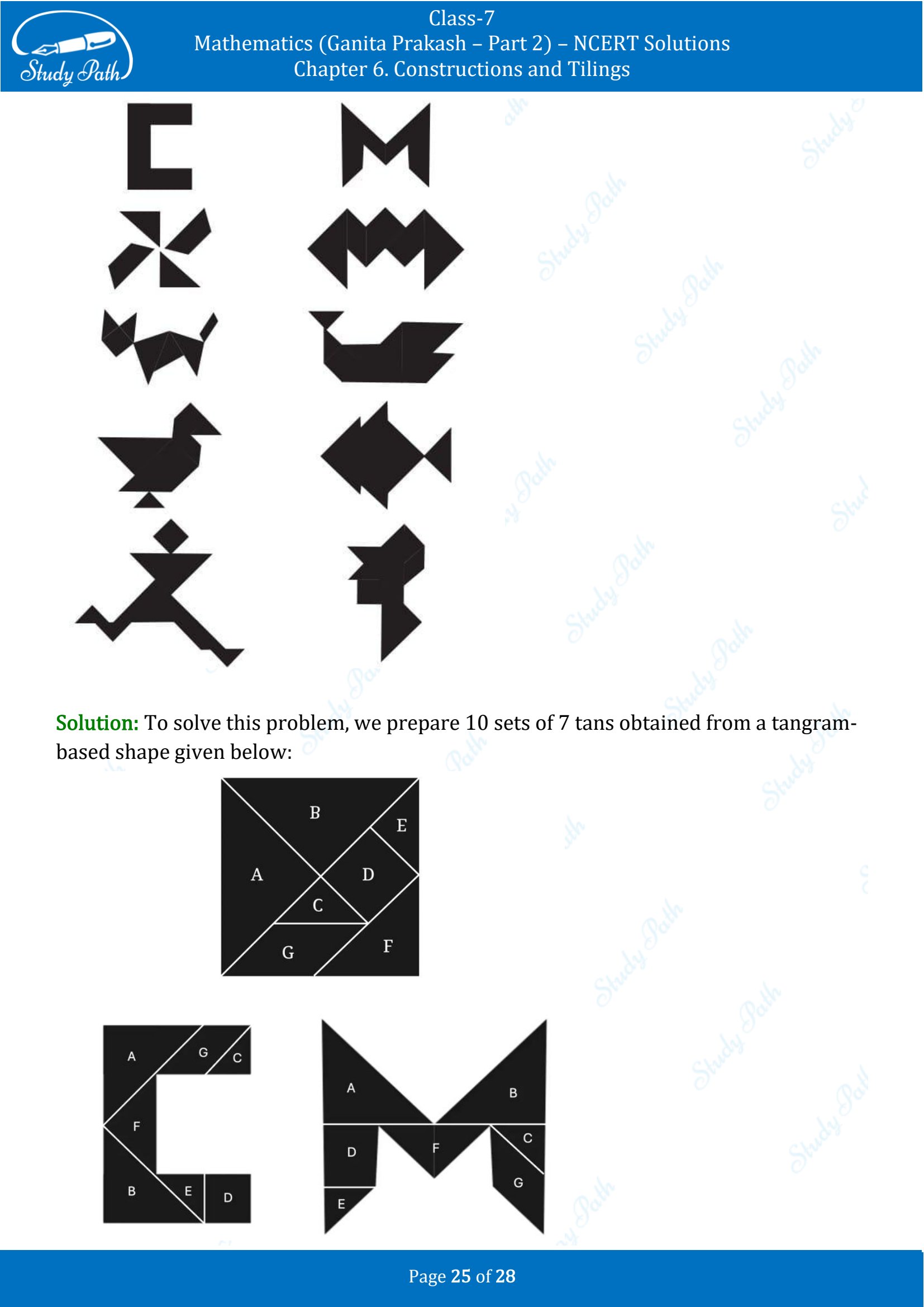
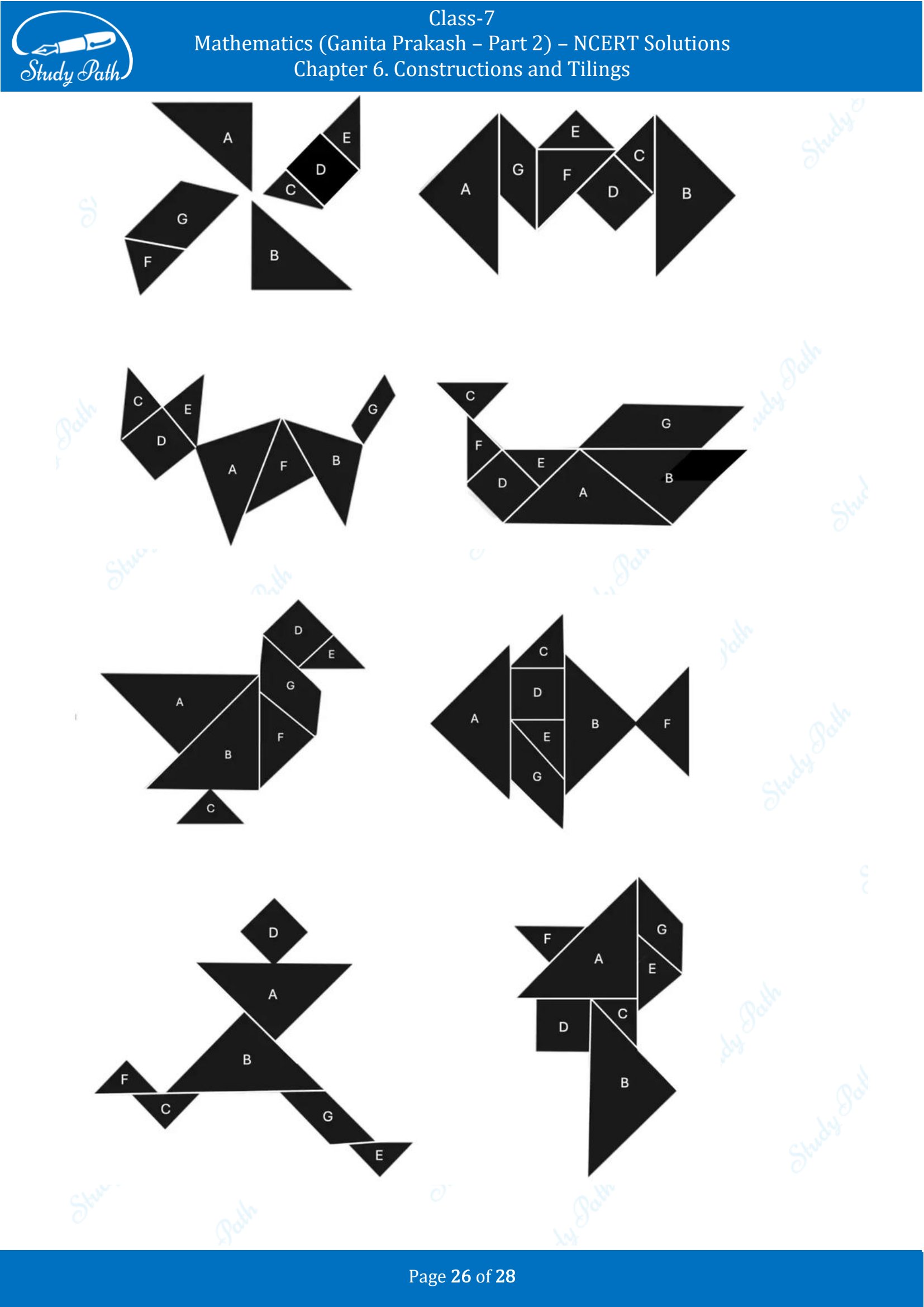
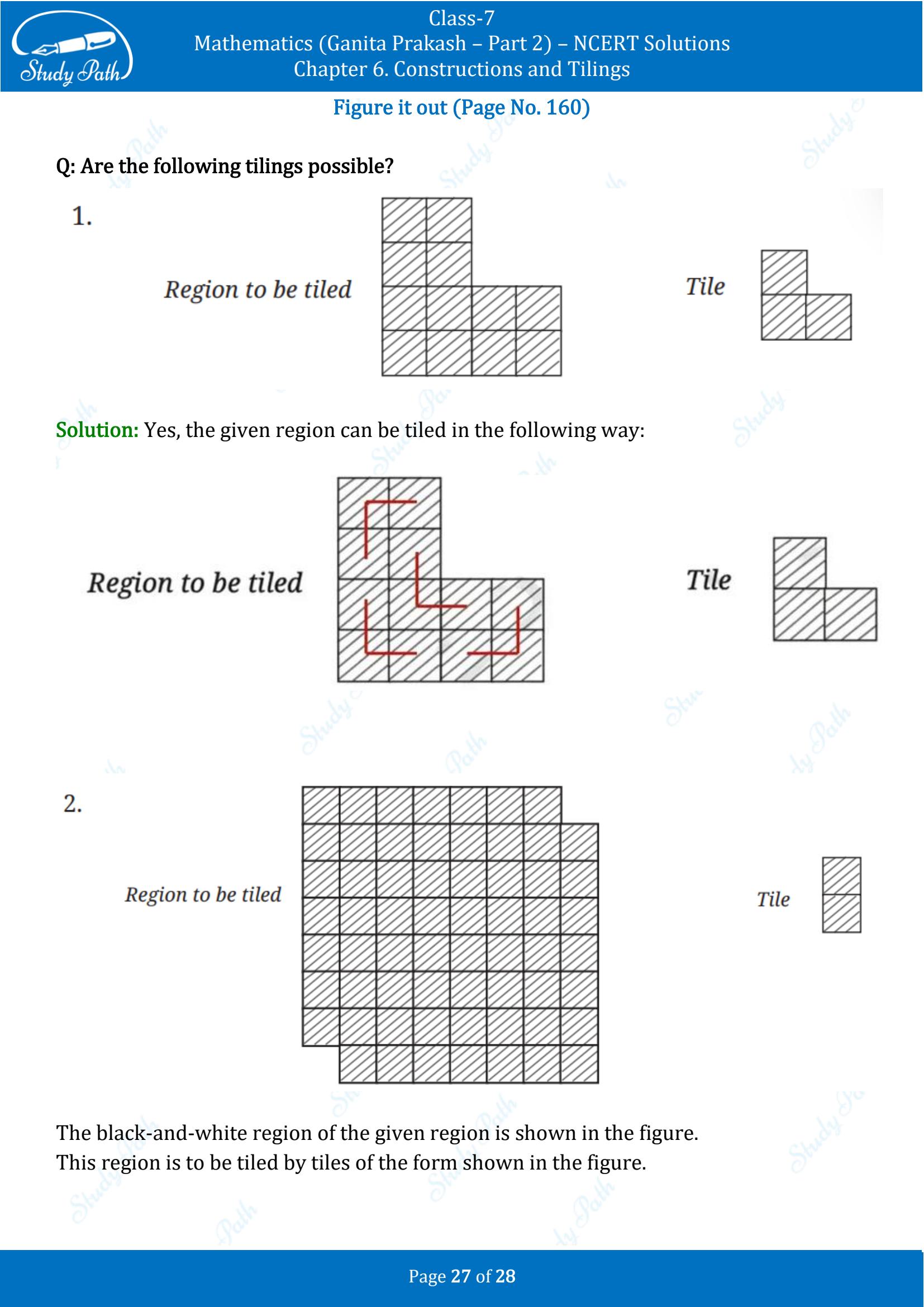
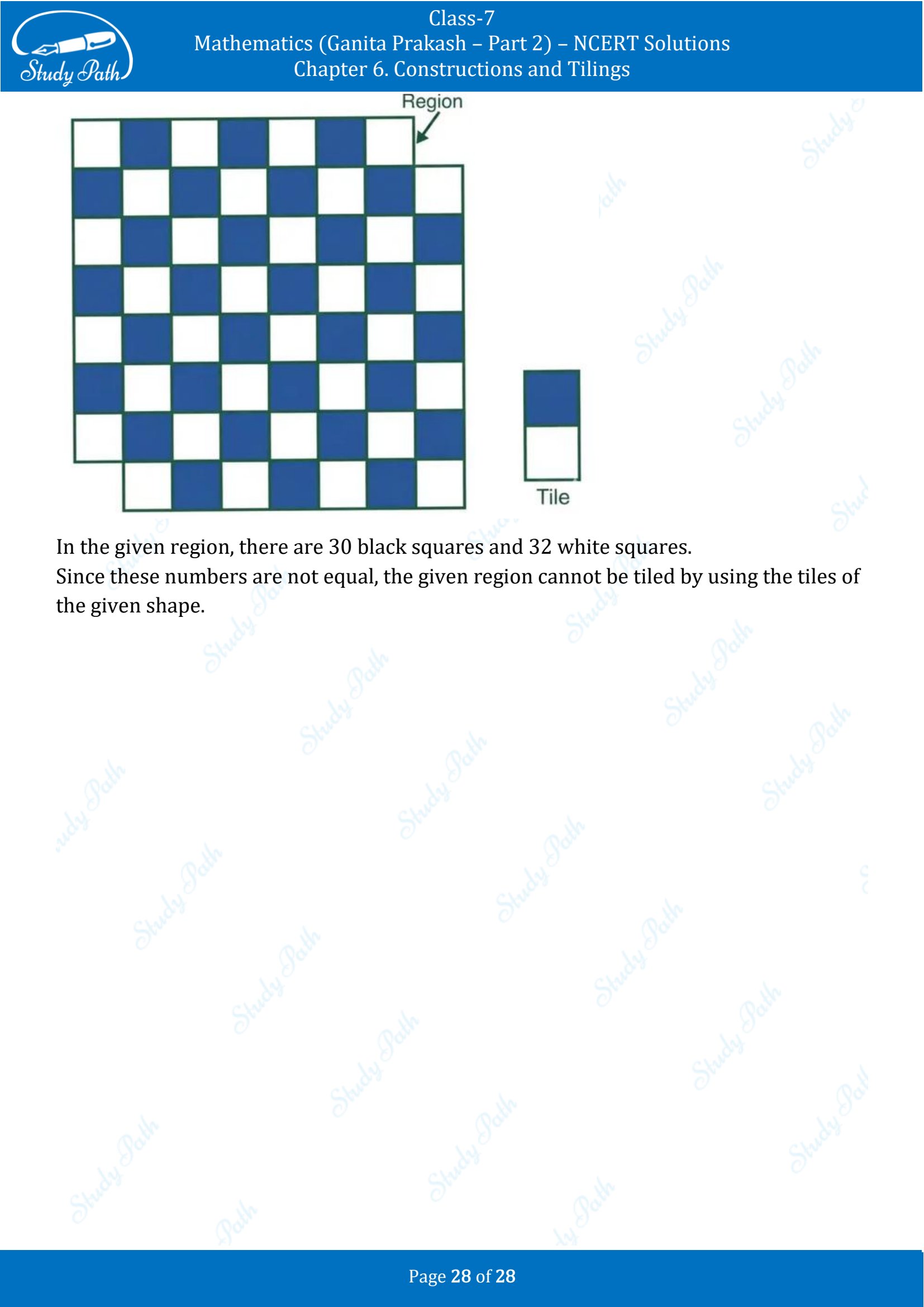
Class 7 Maths Chapter 6 Constructions and Tilings NCERT Questions and Answers
Chapter 6, Constructions and Tilings, introduces students to geometric constructions and the creative use of shapes in patterns and designs. Students learn how to construct perpendicular bisectors, bisect and copy angles, draw parallel lines, and create geometric designs using only a ruler and compass. The chapter also explores tiling, where different shapes are arranged to cover a surface completely without leaving gaps or overlapping.
The chapter is divided into two main sections:
- 6.1 Geometric Constructions: Learning to construct perpendicular bisectors, right angles, angle bisectors, and parallel lines using a ruler and compass. Students also explore the construction of regular hexagons, stars, arches, and other geometric designs.
- 6.2 Tiling: Understanding how shapes can be arranged to cover a surface without gaps or overlaps. This section introduces tangrams, tiling patterns, and methods for determining whether a given region can be tiled using particular shapes.
Important Concepts in Class 7 Maths Chapter 6 Constructions and Tilings
The important concepts covered in this chapter include:
- Geometric Constructions: Drawing accurate geometric figures using a ruler and compass without directly measuring angles.
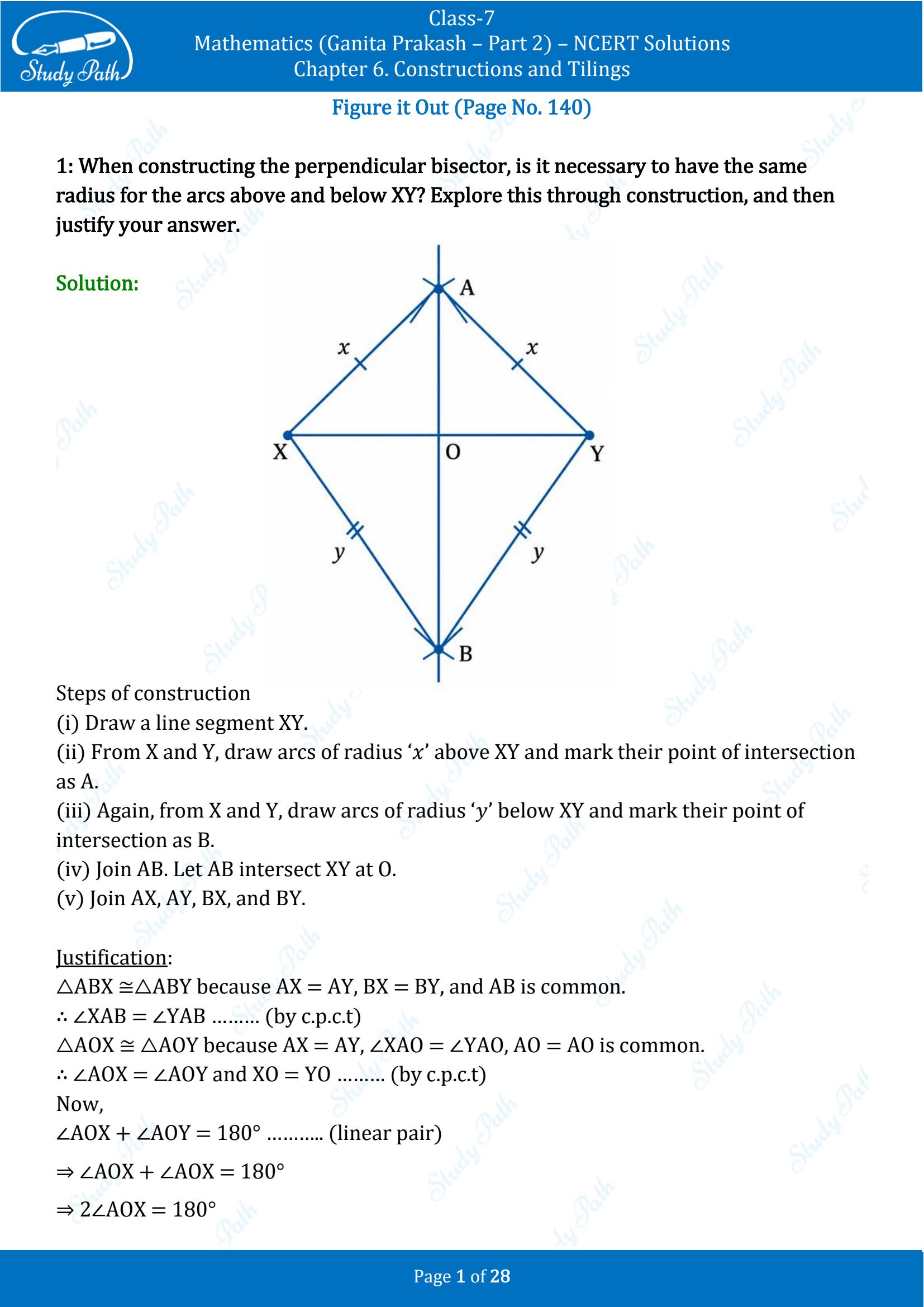
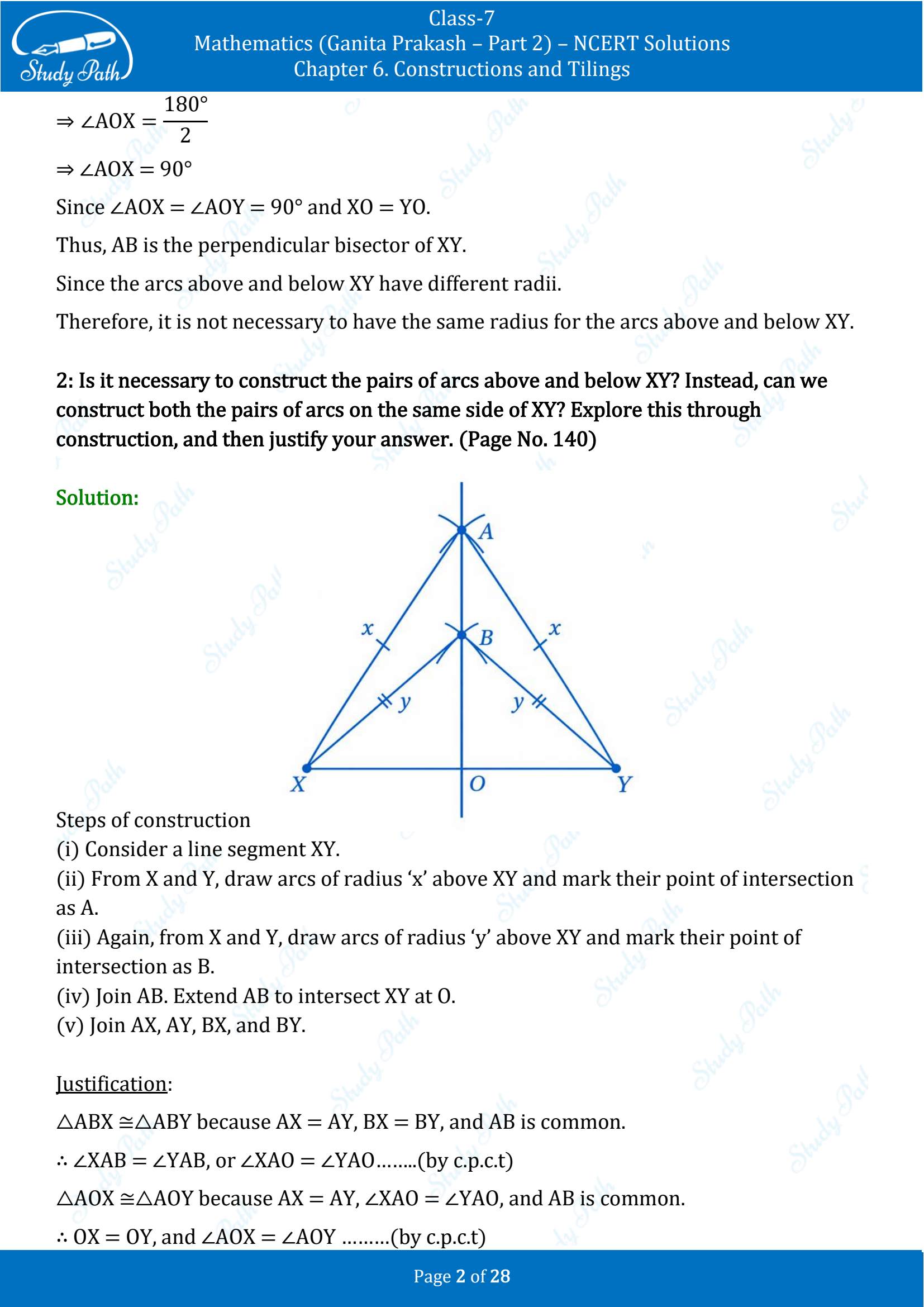
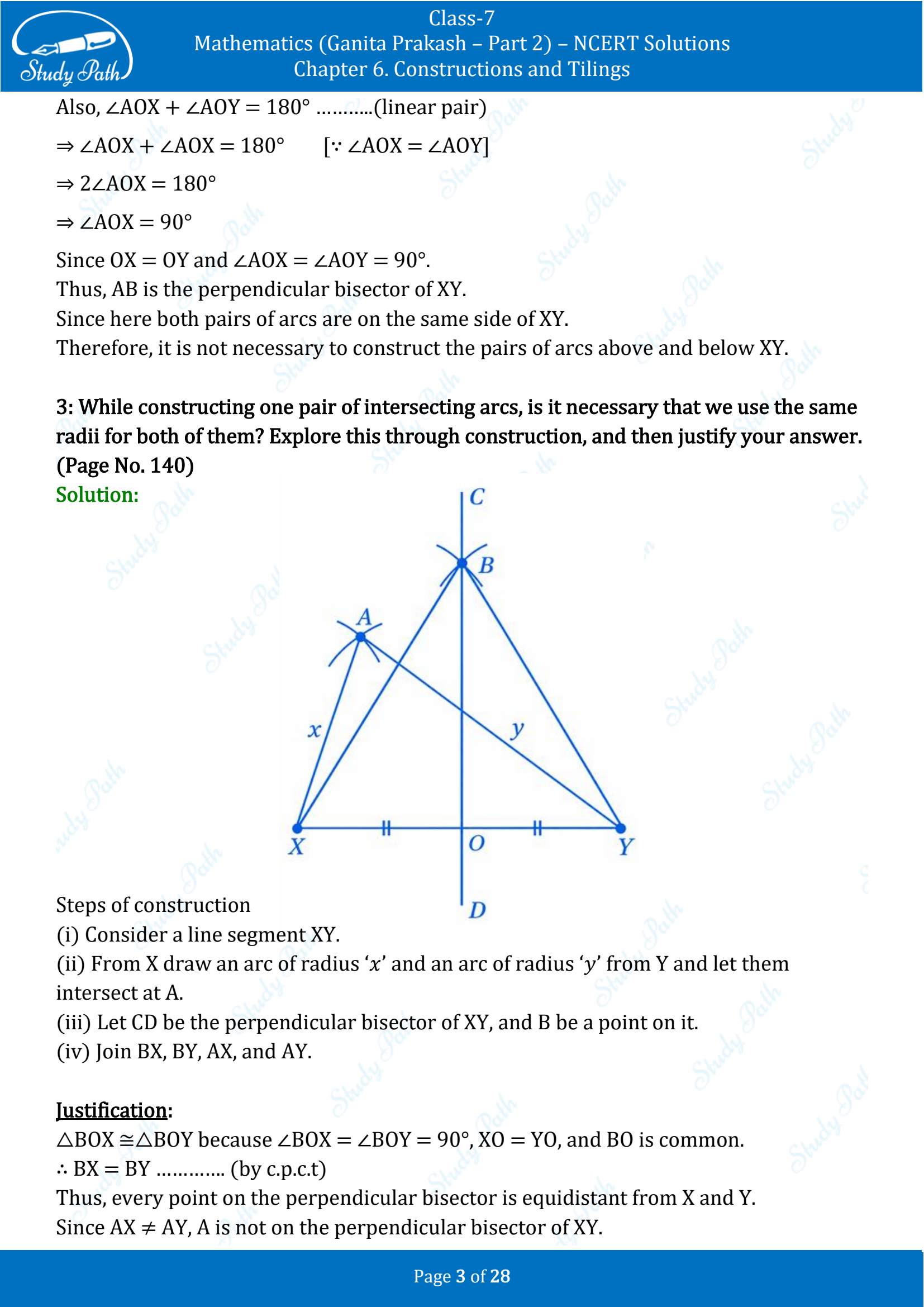
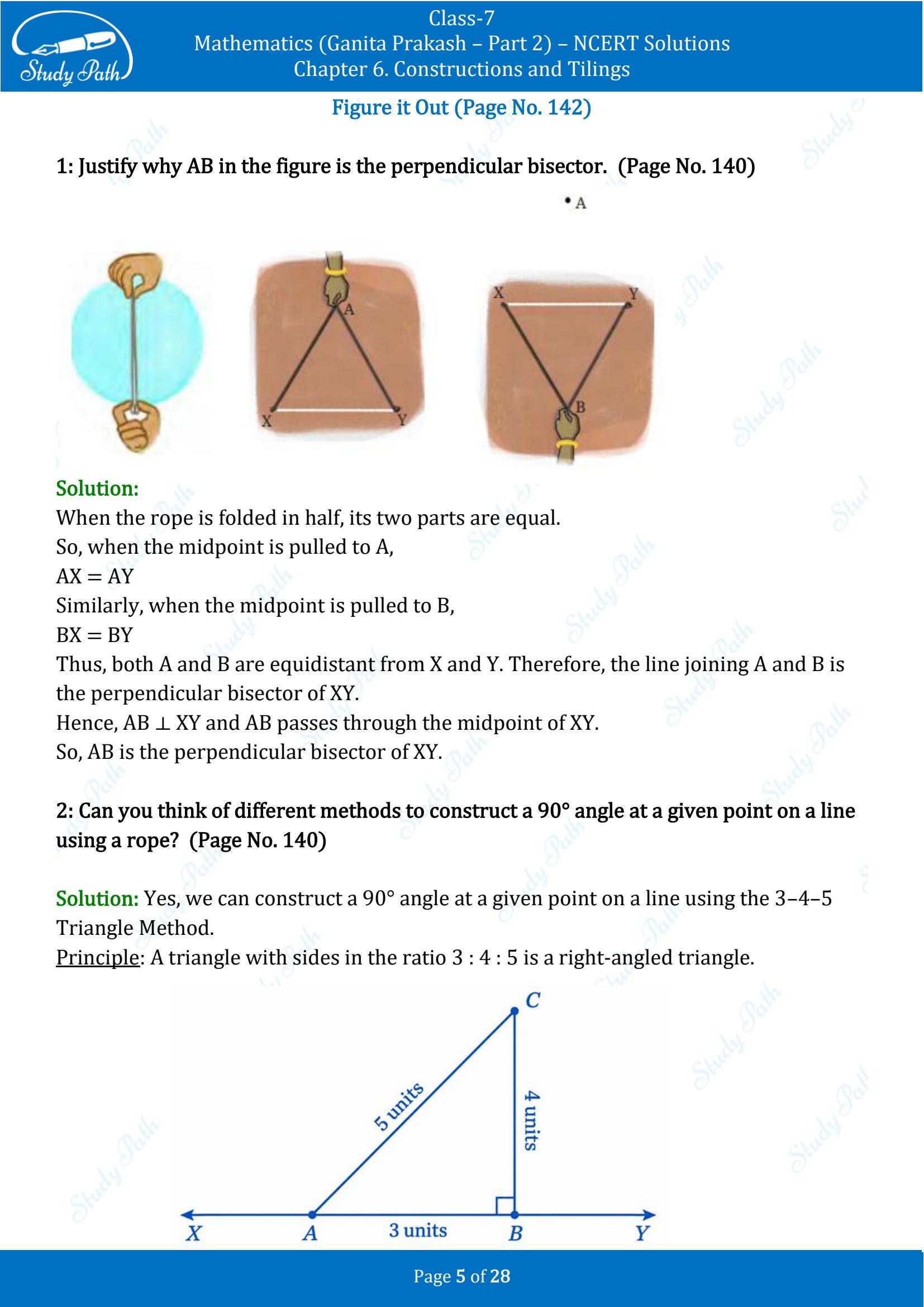
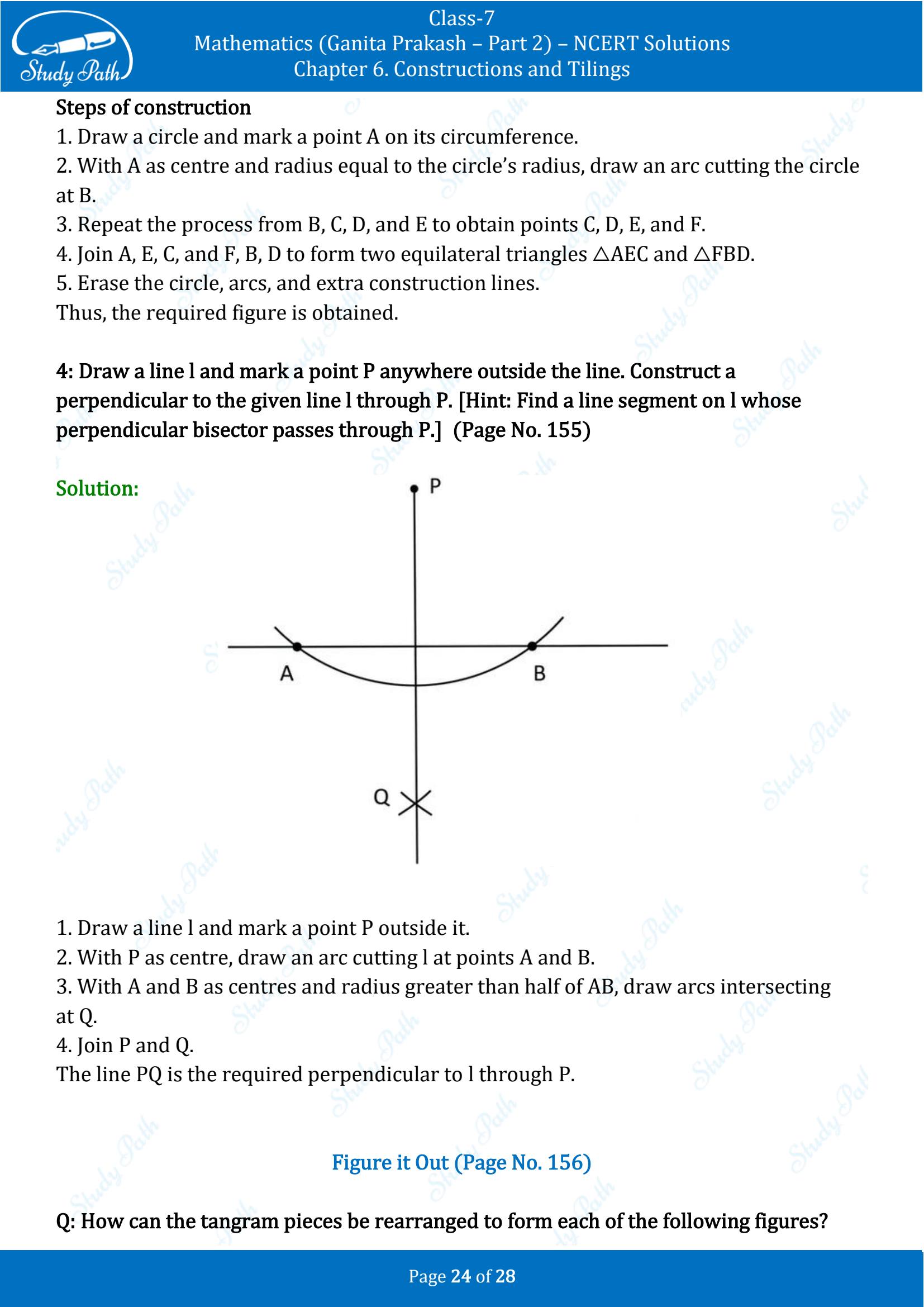
- Perpendicular Bisector: Constructing a line that divides a line segment into two equal parts at a right angle (90°).
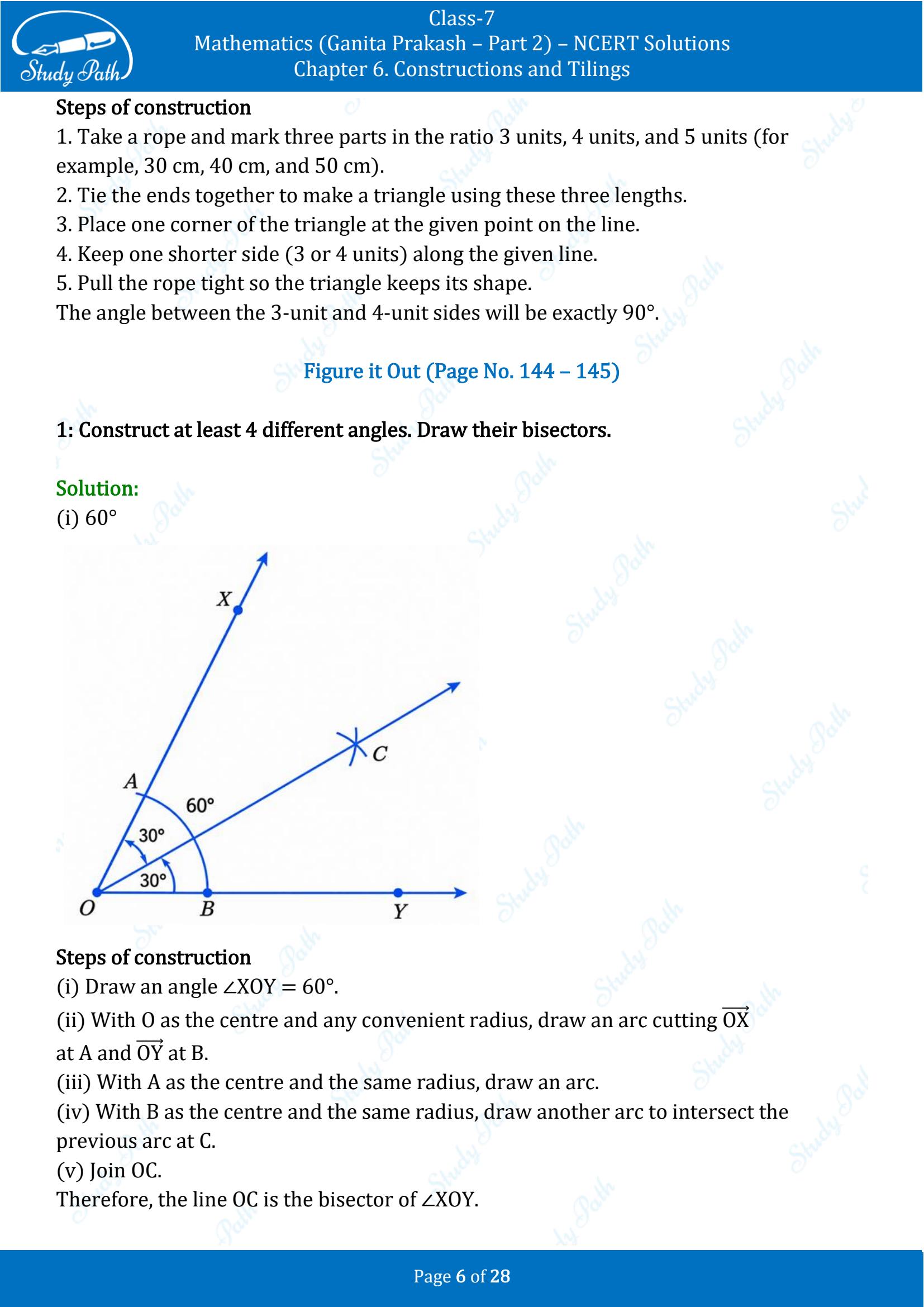
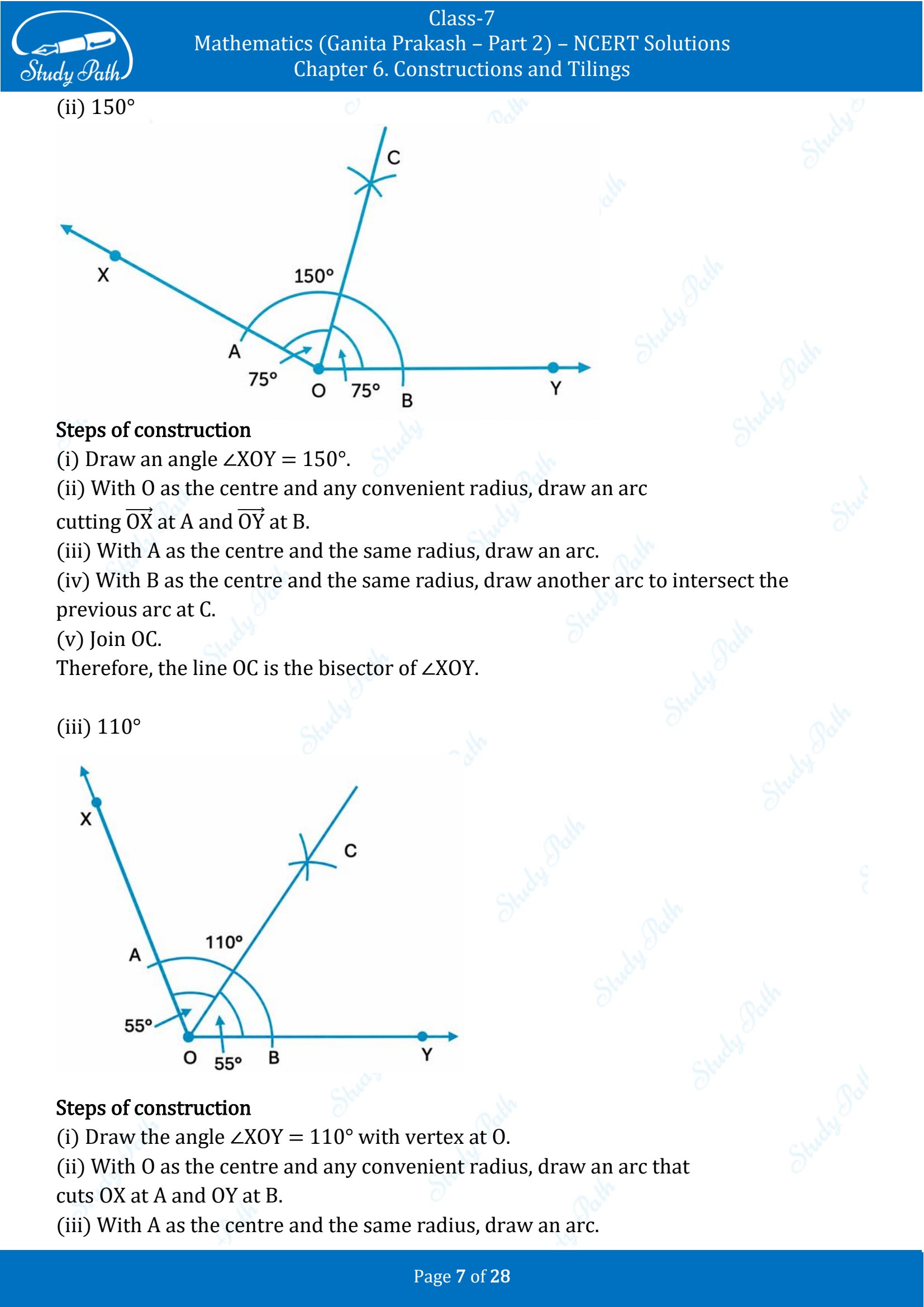
- Angle Bisector: Dividing a given angle into two equal angles using a ruler and compass.
- Construction of Parallel Lines: Drawing a line parallel to a given line by copying corresponding angles.
- Construction of Special Angles: Constructing angles such as 90°, 60°, 30°, and 15° using geometric methods.
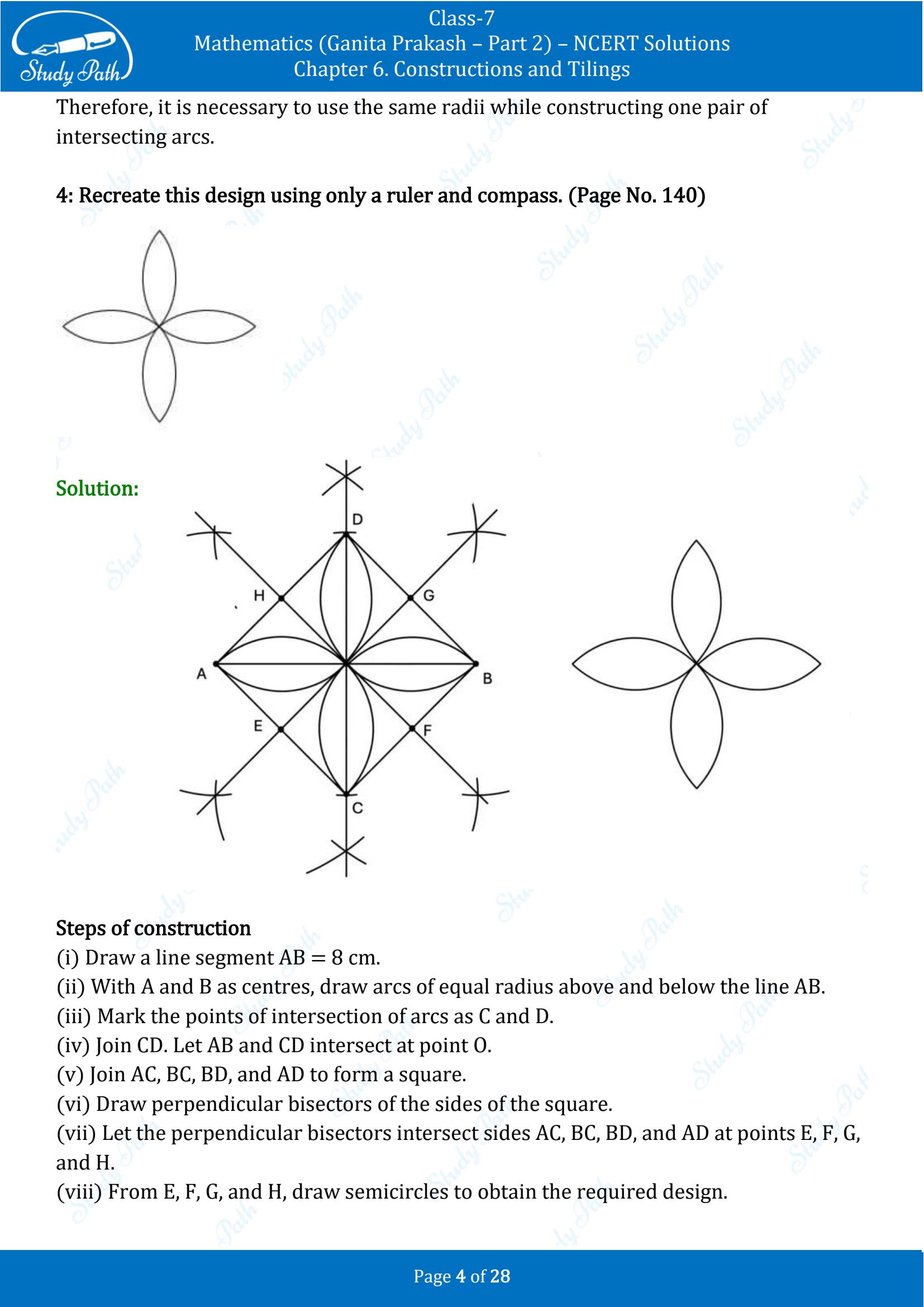
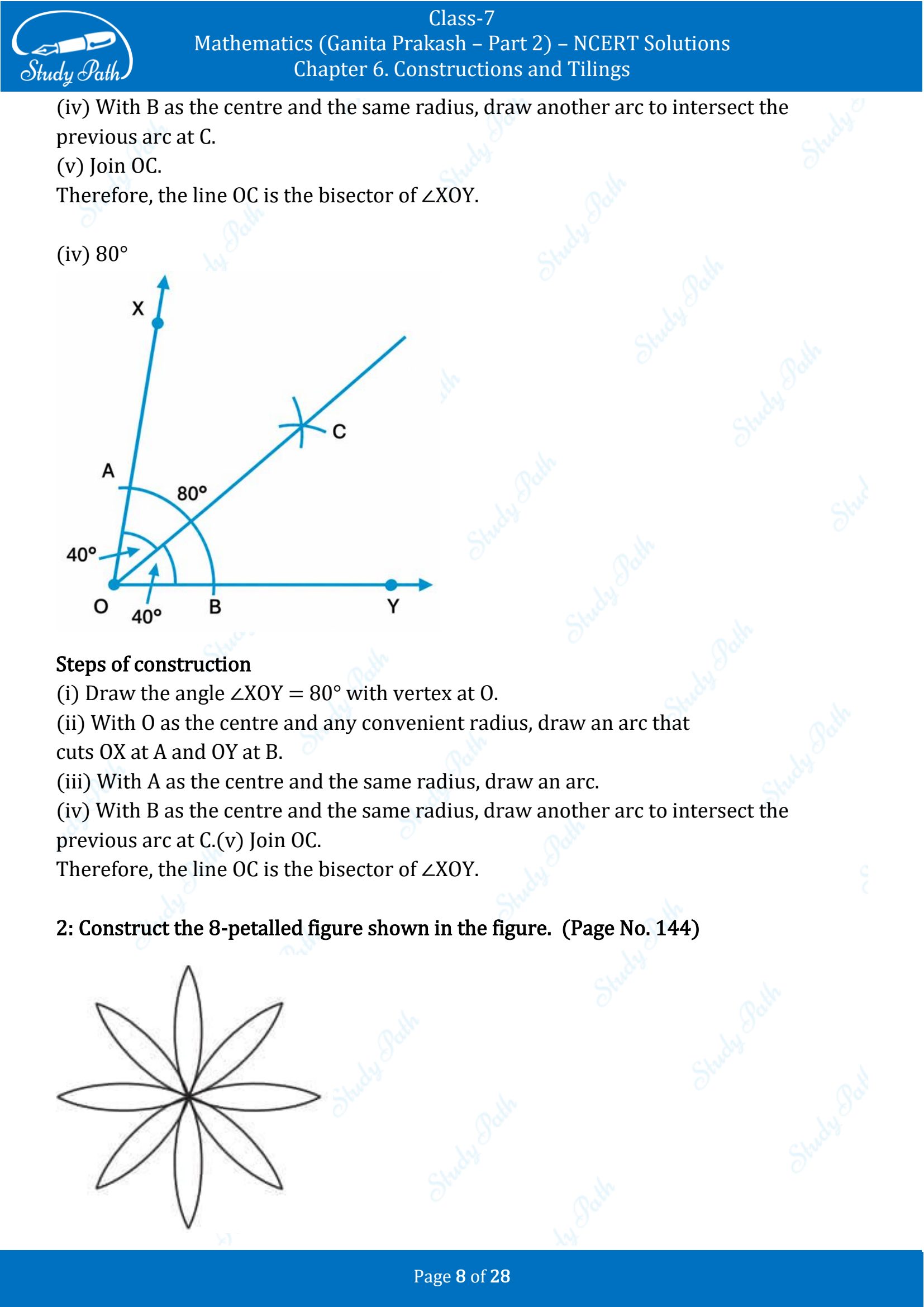
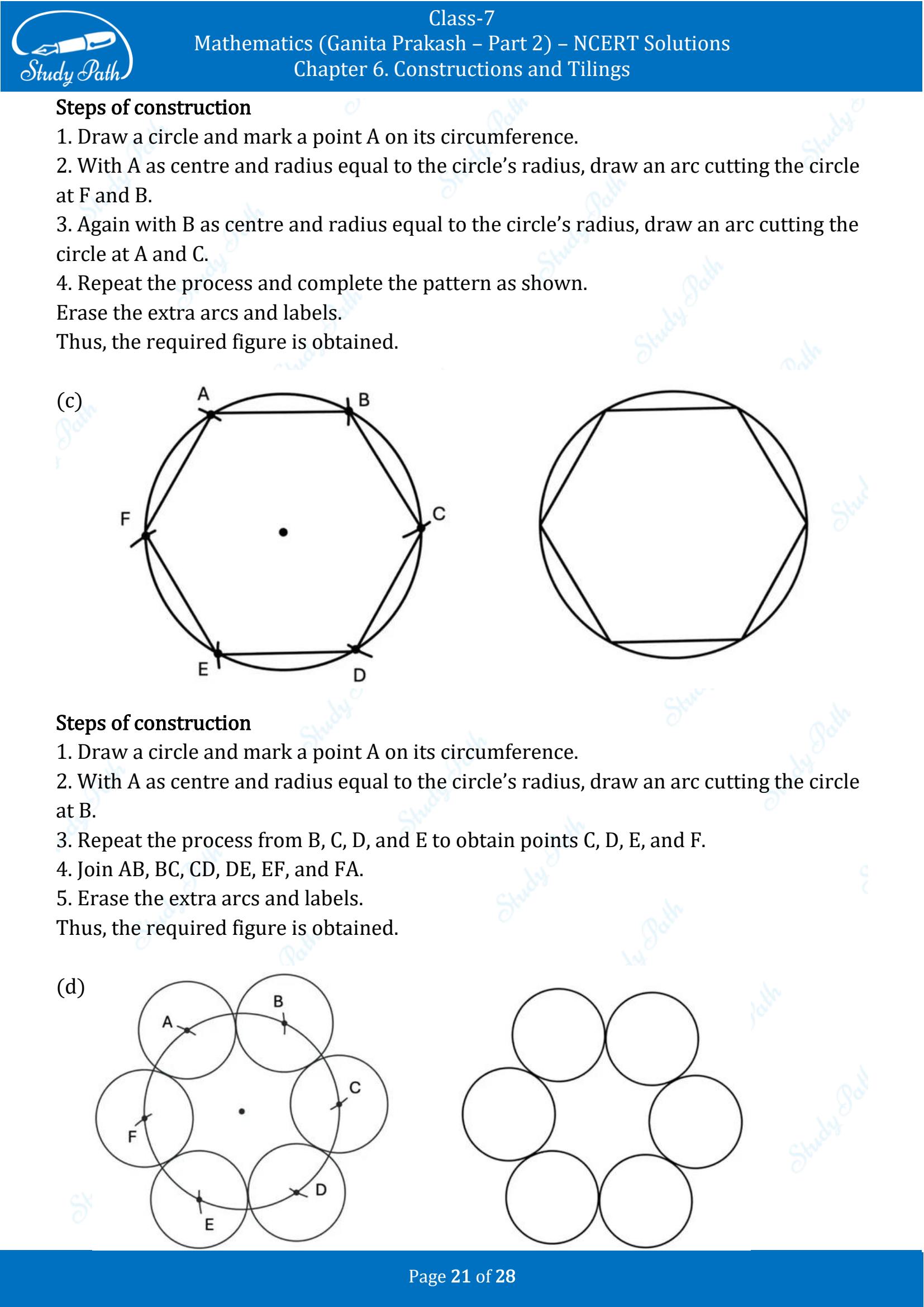
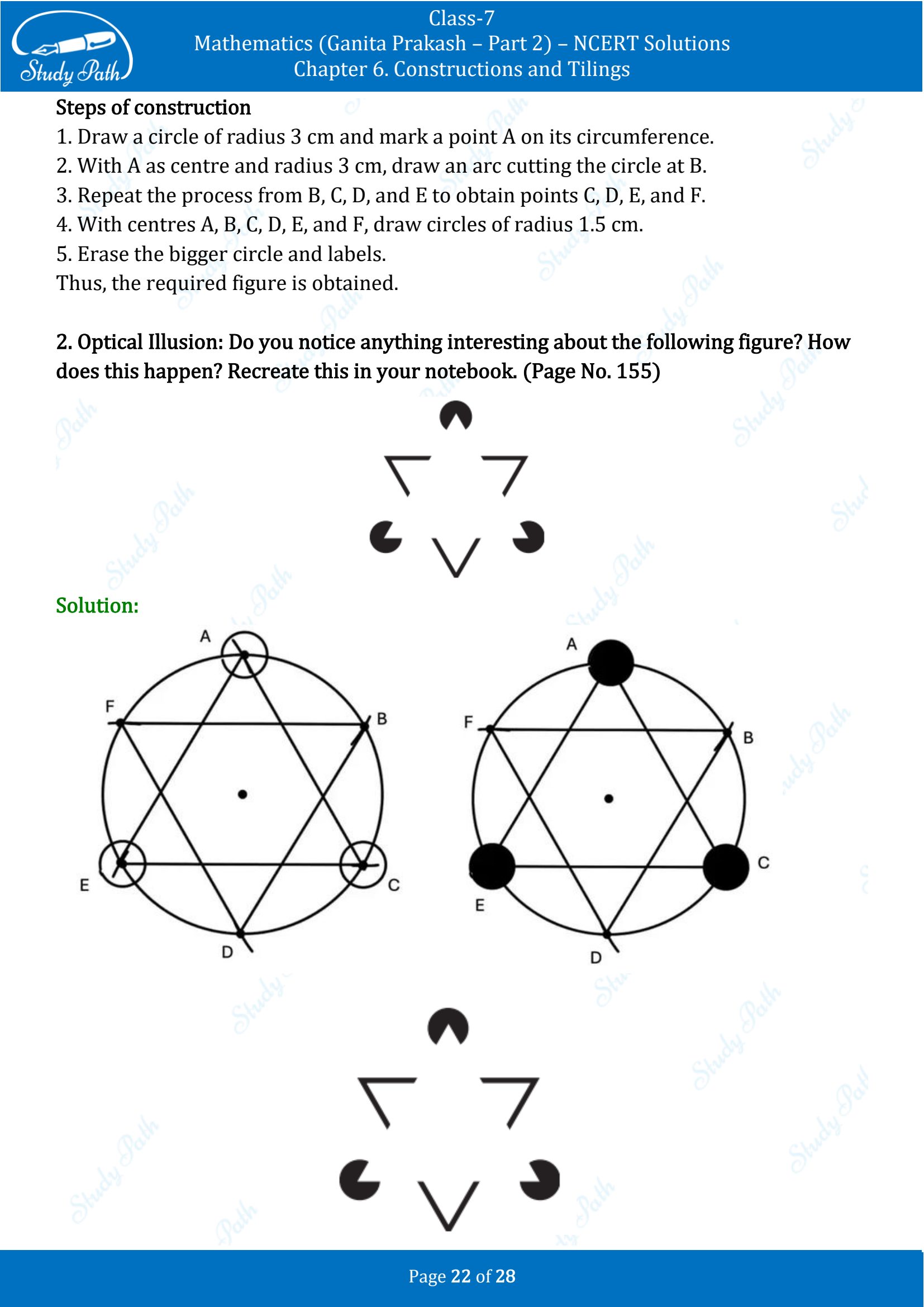
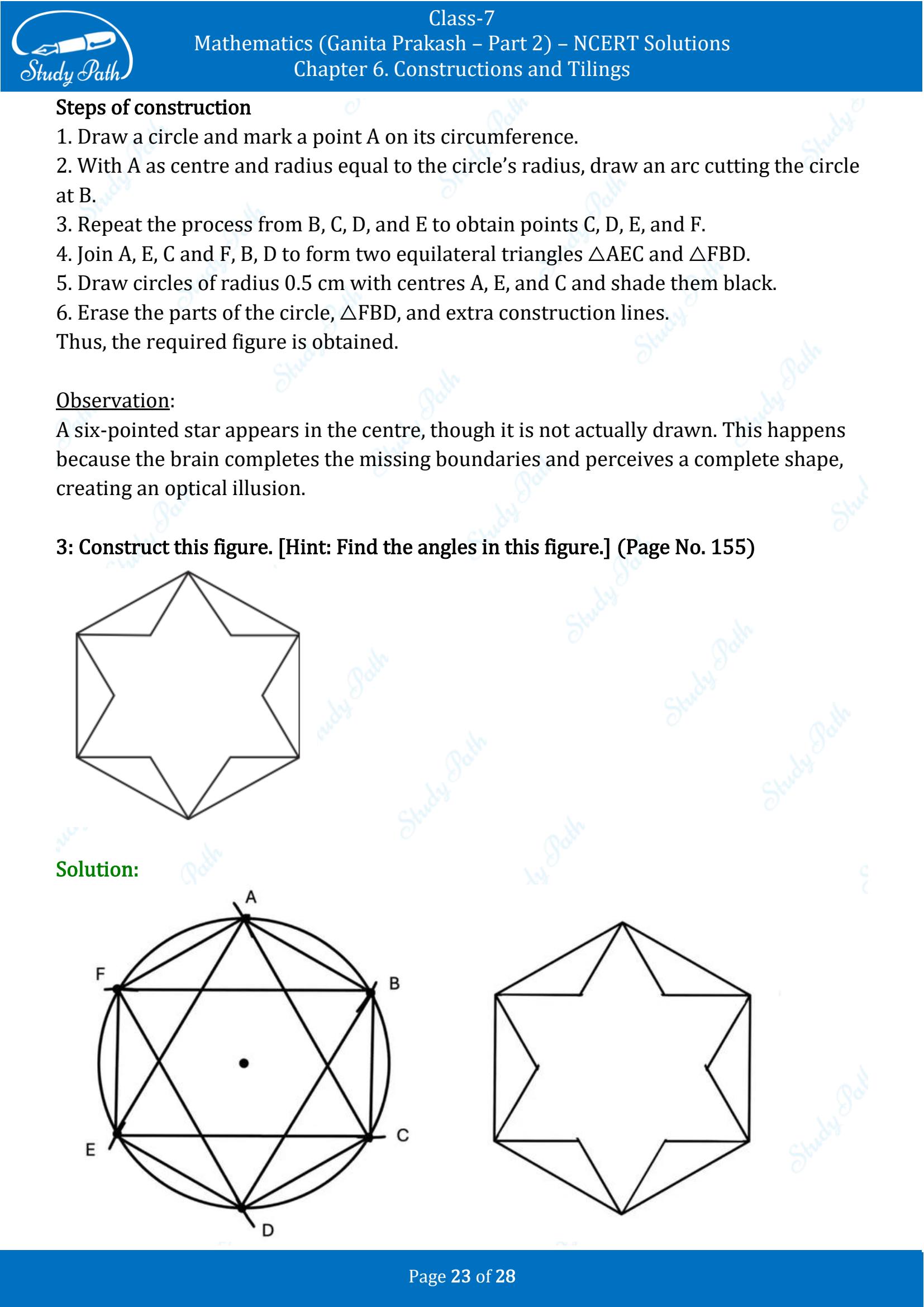
- Regular Hexagons and Geometric Designs: Constructing regular hexagons, stars, and decorative arches using circles, arcs, and straight lines.
- Tangrams: Rearranging geometric pieces to form different figures while using all the pieces without overlapping.
- Tiling Patterns: Covering a region completely with geometric shapes without gaps or overlaps and identifying whether particular tiling arrangements are possible.