

NCERT Solutions for Class 9 English Kaveri Poem 5 Nine Gold Medals are provided here with simple and easy-to-understand explanations. This poem is included in Unit 5 of the NCERT textbook Kaveri. It explores compassion, inclusion, and sportsmanship that places people above competition. These NCERT Solutions for Class 9 help students understand the main ideas, complete textbook activities, improve their language skills, and prepare for school examinations.
Nine Gold Medals Class 9 English Questions and Answers
Reflect and Respond (NCERT Textbook Page No. 156)
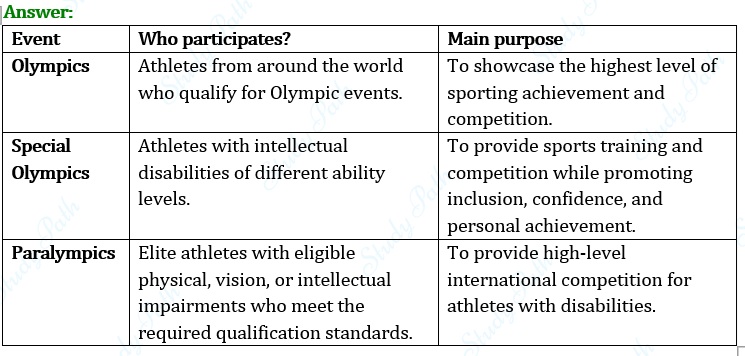
I. Work in pairs. Discuss the difference between Olympics, Special Olympics, and Paralympics.
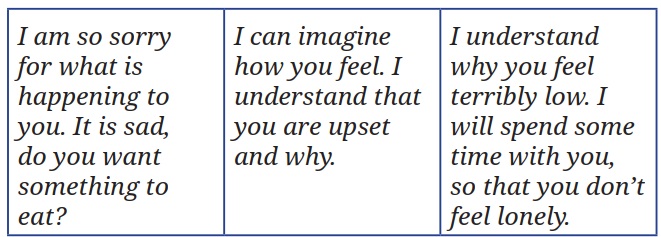
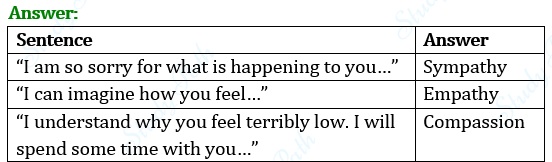
II. Work in pairs to match the words ’empathy’, ‘sympathy’, and ‘compassion’ to the sentences given in the table.
Answer:
III. Work in pairs. List the words you associate with ’empathy’. Share your responses with your classmates and teacher.
Answer: Words associated with empathy: understanding, compassion, kindness,
sensitivity, care, consideration, awareness, warmth, acceptance, patience, solidarity, inclusion, support, listening, humanity, and selflessness.
Check Your Understanding (NCERT Textbook Page No. 158-160)
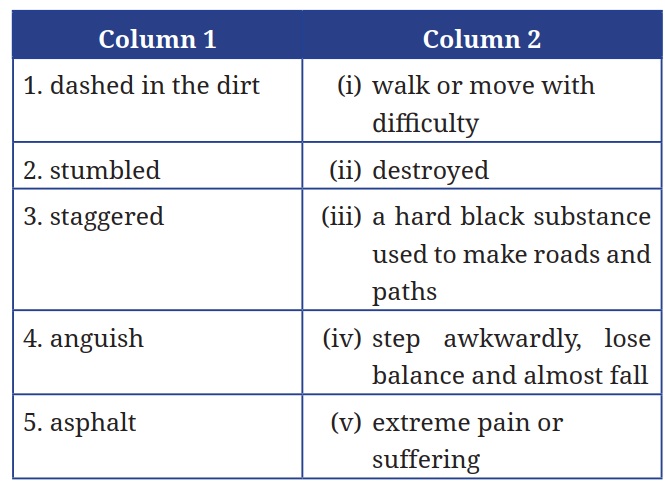
I. Work in pairs. Match the words and phrases in Column 1 with their meanings in Column 2. You may read the poem again and infer the contextual meaning. Check your answers with the teacher.
Answer:
| Column 1 | Column 2 (Meaning) |
| 1. dashed in the dirt | (ii) destroyed |
| 2. stumbled | (iv) step awkwardly, lose balance and almost fall |
| 3. staggered | (i) walk or move with difficulty |
| 4. anguish | (v) extreme pain or suffering |
| 5. asphalt | (iii) a hard black substance used to make roads and paths |
II. Identify the gist of each stanza. Write the number of the stanza in the boxes given.
- Spectators cheered participants of different events and waited enthusiastically for the final event to start. [ ]
- All runners dashed ahead as soon as they heard the gun shot; suddenly, one of the athletes tripped and fell on the ground. [ ]
- The race finished with nine athletes holding hands and winning the well-deserved gold medals; their smiles, and spectators standing up to applaud, conveyed everything. [ ]
- Participants got ready at the starting line and nine determined athletes waited for the sound of the gun. [ ]
- Athletes from various parts of the country had gone through months of training; had big dreams of winning a medal. [ ]
- The eight athletes stopped to help the young fallen athlete stand up, forgetting that they were competing. [ ]
- Nine athletes held the banner and walked hand in hand; this gesture represented the ethos of Special Olympics. [ ]
- The young athlete felt his dreams were shattered and cried in pain and disappointment, but something unique happened. [ ]
Answer:
- Spectators cheered participants of different events and waited enthusiastically for the final event to start. [2]
- All runners dashed ahead as soon as they heard the gun shot; suddenly, one of the athletes tripped and fell on the ground. [4]
- The race finished with nine athletes holding hands and winning the well-deserved gold medals; their smiles, and spectators standing up to applaud, conveyed everything. [8]
- Participants got ready at the starting line and nine determined athletes waited for the sound of the gun. [3]
- Athletes from various parts of the country had gone through months of training; had big dreams of winning a medal. [1]
- The eight athletes stopped to help the young fallen athlete stand up, forgetting that they were competing. [6]
- Nine athletes held the banner and walked hand in hand; this gesture represented the ethos of Special Olympics. [7]
- The young athlete felt his dreams were shattered and cried in pain and disappointment, but something unique happened. [5]
III. Let us appreciate the poem.
1. Two examples of alliteration from the poem are (i) __________ and (ii) __________.
Answer: Two examples of alliteration from the poem are (i) “stumbled and staggered” and (ii) “dashed in the dirt.”
2. Give three examples of visual imagery from the poem.
(i) _________.
(ii) _________.
(iii) _________.
Answer: (i) “The blocks were all lined up” — this creates a picture of the athletes getting ready at the starting line.
(ii) “The runners all charging ahead” — this helps us imagine the athletes rushing forward as soon as the race begins.
(iii) “They came to the finish line holding hands still” — this creates a clear image of all nine athletes finishing the race together.
3. Give an example of auditory imagery from the poem. (i) _________ .
Answer: (i) “The signal was given, the pistol exploded” – the sound of the pistol creates auditory imagery and helps the reader hear the beginning of the race.
4. How does the use of imagery make the poem more appealing?
Answer: The use of imagery makes the poem more appealing by helping the reader see, hear, and imagine the events of the race clearly. Images such as the runners charging ahead, the boy falling, and all nine athletes crossing the finish line hand in hand make the scene vivid and emotional. The sound of the starting pistol also adds excitement. Thus, imagery makes the poem lively, realistic, and more touching for the reader.
5. How does the poet’s tone change from the beginning to the end of the poem?
Answer: At the beginning, the poet’s tone is excited and energetic as the athletes prepare for the race and the spectators eagerly wait for it to begin. The tone then becomes tense and sympathetic when the youngest athlete falls and cries in pain. By the end, the tone becomes warm, joyful, and inspiring as all nine athletes help one another and cross the finish line together, showing the true spirit of sportsmanship.
6. What is the overall mood created by the poem?
Answer: The overall mood of the poem is inspiring, emotional, and uplifting. At first, there is excitement about the race, followed by sadness when the youngest athlete falls. However, the mood becomes warm and joyful when the other runners stop to help him and all nine finish the race together.
7. What is the message being conveyed by the poem?
Answer: The poem conveys the message that true victory lies in compassion, unity, and helping others rather than only in winning. The eight runners give up their chance of individual victory to help the fallen athlete, and all nine finish the race together. Their action shows that humanity and sportsmanship are more important than medals or competition.
Critical Reflection (NCERT Textbook Page No. 160-162)
I. Read the extracts given below and answer the questions that follow.
1: The eight other runners pulled up on their heels
The ones who had trained for so long to compete
One by one they all turned round and went back to help him
And brought the young boy to his feet.
(i) Select the correct option to complete the sentence. The phrase ‘pulled up on their heels’ means that the runners _______.
A. moved aside
B. stopped running
C. tried to run faster
D. jumped ahead
Answer: B. stopped running.
(ii) Mention one character trait common to all the eight other runners.
Answer: One character trait common to all the eight runners is compassion. They stopped their race, turned back, and helped the fallen boy instead of thinking only about winning. Their action shows that they cared more about helping a fellow athlete than about individual success.
(iii) What is the tone of the poet in these lines?
Answer: The poet’s tone in these lines is admiring and appreciative. He praises the eight runners for stopping the race and turning back to help the fallen athlete. Their kindness and concern show true compassion and sportsmanship.
(iv) How might the young athlete have felt on being helped by the others?
Answer: The young athlete might have felt grateful, relieved, and encouraged when the other runners stopped to help him. After falling, he had felt pain and disappointment, but their kindness would have made him feel supported and included.
(v) Would you consider this incident as a turning point in the poem? If yes, why? If no, why not?
Answer: Yes, this incident is undoubtedly the turning point of the poem. Before it, the poem describes a normal competitive race in which every athlete wants to win. When the eight runners stop and return to help the fallen boy, the focus shifts from competition to compassion and unity. From this moment, winning becomes less important than helping one another. This incident gives the poem its deeper message about empathy, humanity, and the true spirit of sportsmanship.
2: That’s how the race ended, with nine gold medals
They came to the finish line holding hands still
And a standing ovation and nine beaming faces
Said more than these words ever will.
(i) How did the nine contestants feel when they reached the finishing line together?
Answer: The nine contestants felt joyful, proud, and deeply satisfied when they reached the finishing line together. Their beaming faces show that they were happy not because of individual victory, but because they had supported one another and completed the race together. Their happiness came from unity, compassion, and true sportsmanship.
(ii) Why do you think all the nine contestants were given gold medals?
Answer: All the nine contestants were awarded gold medals because they each displayed extraordinary sportsmanship and human compassion. By prioritising the fallen athlete over their own chance to win, they all symbolised the true spirit of the Games.
(iii) Complete the sentence appropriately. The holding of hands signifies a feeling of _________.
Answer: The holding of hands signifies a feeling of unity and togetherness.
(iv) Choose the correct option to complete the sentence.
The spectators giving a ‘standing ovation’ indicates that they were _________.
A. amazed
B. speechless
C. distracted
D. thoughtful
Answer: A. amazed.
(v) Explain the last line of the extract.
Answer: The line “Said more than these words ever will” shows that the athletes’ act of kindness was so powerful that words could not fully express its meaning. Their standing ovation and beaming faces conveyed deep compassion, unity, and sportsmanship, proving that actions can sometimes communicate more strongly than words.
II. Answer the following questions.
1. Describe how the setting established in the first two stanzas of the poem creates a vivid atmosphere for the events that follow.
Answer: The first two stanzas create a lively and exciting atmosphere. The poem first describes athletes who have come from different parts of the country after weeks and months of training, showing their determination and hopes of winning medals. Then, the spectators gather around the field to cheer them, and the excitement rises as the final event approaches. This setting builds anticipation and energy, preparing the reader for the important events of the race that follow.
2. How do you think the youngest athlete might have felt when he fell?
Answer: The youngest athlete might have felt frustrated, disappointed, and helpless when he fell. His dreams of winning the race seemed to be shattered, and he cried in pain and anguish. However, the support he received from the other athletes changed the situation and gave the moment a deeper meaning.
3. Why were the athletes eager to begin the race?
Answer: The athletes were eager to begin the race because they had trained for months and had big dreams of winning a medal. They were determined to perform well and achieve their goals in the final event.
4. What does the transformation of the hundred-yard dash to a walk symbolise?
Answer: The change of the hundred-yard dash into a walk symbolises the shift from competition to cooperation and compassion. The athletes stop trying to defeat one another and choose to support the fallen runner instead. By walking together to the finish line, they show that unity, empathy, and sportsmanship are more important than winning
5. How might the poem be different if the focus was solely on individual achievement rather than collective support?
Answer: If the poem focused only on individual achievement, it would become an ordinary poem about competition and winning medals. The athletes would continue running instead of stopping to help the fallen boy, and the main emphasis would be on who finished first. The poem would lose its deeper message of compassion, unity, empathy, and true sportsmanship. The collective support of the runners is what makes the poem inspiring and meaningful.
6. How does the poet’s use of language and tone enhance the reader’s engagement with the poem?
Answer: The poet’s use of simple, vivid language makes the race easy to imagine and creates excitement as the athletes begin running. The tone changes from energetic and suspenseful to emotional and admiring when the athletes stop to help the fallen runner. This change keeps the reader engaged and highlights the poem’s message of compassion, unity, and true sportsmanship.
7. What might be the poet’s purpose of writing this poem?
Answer: The poet’s purpose in writing this poem is to show that true success is not only about winning, but also about kindness, empathy, and helping others. Through the actions of the nine athletes, the poem teaches that humanity and togetherness are more valuable than individual achievement. It also celebrates the true spirit of sportsmanship, where supporting one another can be a greater victory than reaching the finish line first.
Vocabulary in Context (NCERT Textbook Page No. 160-162)
I. The phrase ‘standing ovation’ is an example of an adjective-noun collocation. Identify two other similar examples from the poem.
Collocation is a pair or group of words that habitually appear together.
Answer: Two other collocations from the poem are:
1. Beaming faces
2. Gold medals
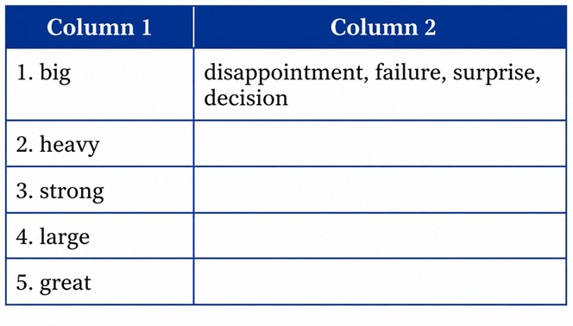
II. Complete the table given below by writing four nouns in Column 2 that collocate with the adjectives in Column 1.
Answer:
| Column 1 (Adjective) | Column 2 (Nouns) |
| 1. big | disappointment, failure, surprise, decision |
| 2. heavy | rain, traffic, load, burden |
| 3. strong | wind, opinion, coffee, foundation |
| 4. large | crowd, amount, scale, number |
| 5. great | achievement, success, effort, importance |
III. Choose the correct adjectives from those given in the box for the underlined words given in the sentences below. Ensure you do not use the same adjective twice.

- The littlest athlete was moving at a steady pace.
- The eight athletes had a smiling attitude.
- When the athlete fell, he gave a huge cry of pain.
- The spectators saw a terrible difference in the athletes who had only come to compete.
- The gaudy crowd cheered the runners enthusiastically.
Answer:
- youngest
- positive
- loud
- significant
- noisy
Listen and Respond (NCERT Textbook Page No. 163-164)
I. You will listen to a radio-talk about Patrick Gomes, a coach of special athletes. As you listen, write true or false for the statements given. (Transcript for teacher on page 268)
1. Patrick Gomes began his career in sports with track events.
Answer: True
2. Patrick Gomes has been coaching special athletes for 10 years.
Answer: False
Reason: Patrick Gomes has been coaching for over 15 years, not 10 years.
3. Patrick Gomes does all the household work himself.
Answer: True
II. You will listen to the radio-talk once again. As you listen, choose the correct option for each question.
1. When the speaker uses the phrase ‘push your boundaries’, he wants listeners to _________ .
(i) challenge themselves
(ii) meet new people
(iii) be open-minded
Answer: (i) challenge themselves
2.Patrick Gomes is a _________ at present.
(i) special athlete
(ii) coach of special athletes
(iii) value education teacher
Answer: (ii) coach of special athletes
3. Special Olympic Games held at Connecticut was a _________ for Patrick Gomes.
(i) motivational year
(ii) turning point
(iii) gradual change
Answer: (ii) turning point
4. As a special athlete, Patrick Gomes mostly participated in _________ .
(i) track events
(ii) jogging
(iii) football
Answer: (iii) football
5. Patrick Gomes believes that sports is essential because it encourages _________ along with fitness.
(i) a positive outlook
(ii) a peaceful mind
(iii) an active life
Answer: (i) a positive outlook
About the Poem: Nine Gold Medals
The poem Nine Gold Medals describes a race in which athletes respond to a fellow competitor’s fall with an unexpected act of kindness. Their decision changes the meaning of winning and turns the event into a celebration of shared humanity.
Students also explore empathy, cooperation, and the contrast between personal ambition and collective care. The activities help them follow the poem’s narrative and explain why its message of sportsmanship leaves a lasting impression.