

NCERT Solutions for Class 6 English Chapter 7 Neem Baba help students understand an interesting conversation between a young girl named Amber and a neem tree. Adapted from the work of S. I. Farooqi, the story explains the history, importance and numerous uses of the neem tree. Here, we provide answers to the textbook questions and activities from Poorvi in simple, student-friendly language.
Class 6 English Poorvi Chapter 7 Neem Baba NCERT Solutions
Let us do these activities before we read (Page 75)
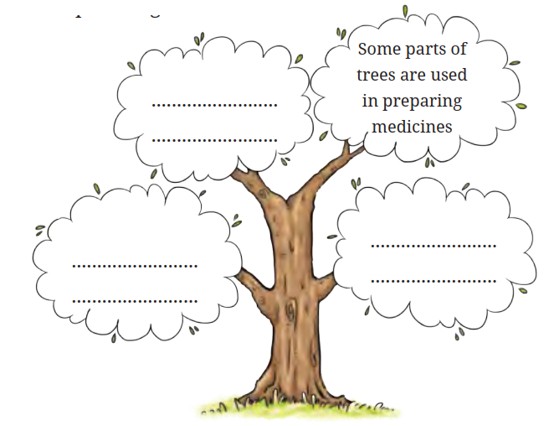
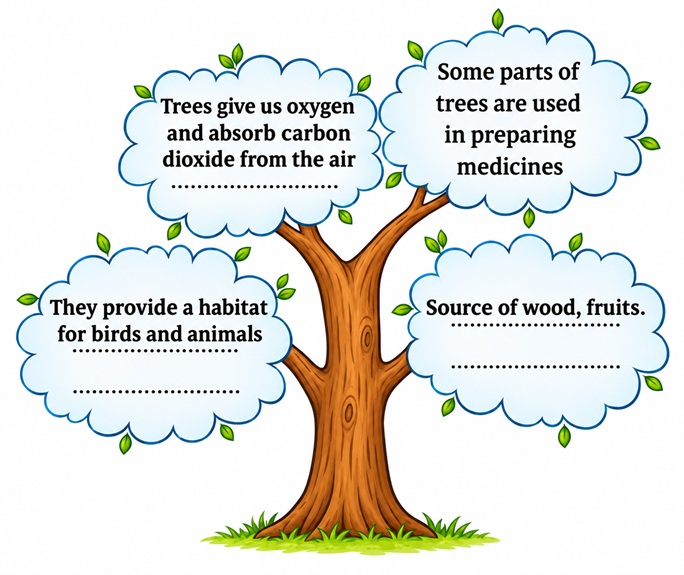
1. A tree is useful to us in many ways. Mention some of these uses. Write them in the picture given below.
Answer:
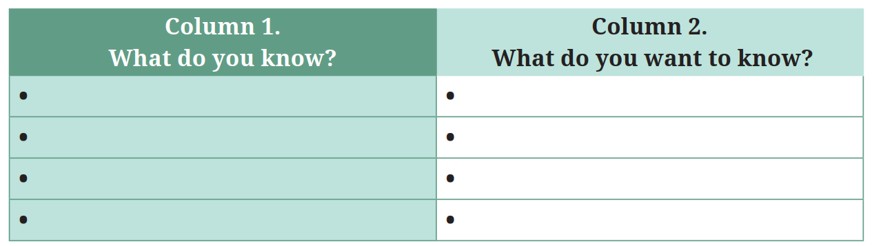
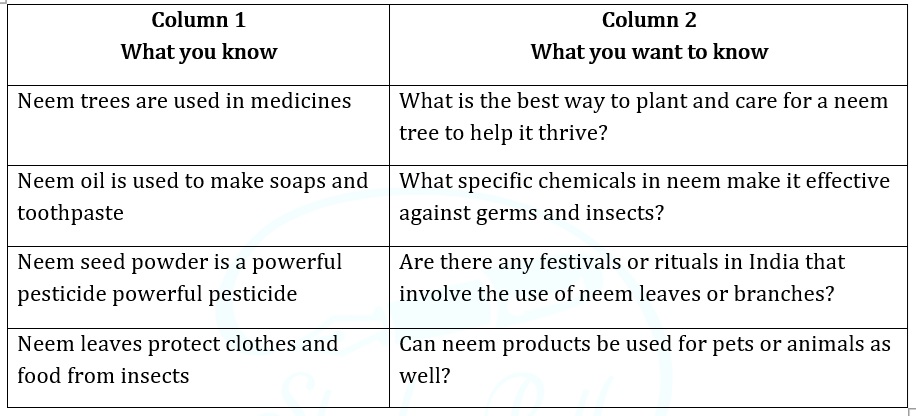
2. Neem is a common tree in our country. Discuss in groups of four and fill Columns 1 and 2 with what you know about the neem tree and what you want to know.
Answer:
Let us discuss (Page 77)
Amber found many facts about the neem tree from Neem Baba. Fill up the fact sheet based on what Neem Baba told her.
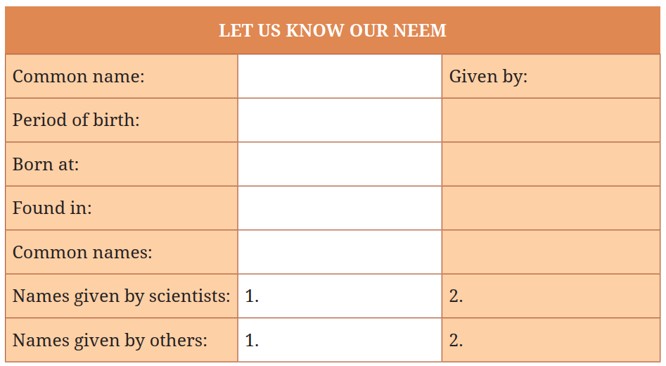
Answer:
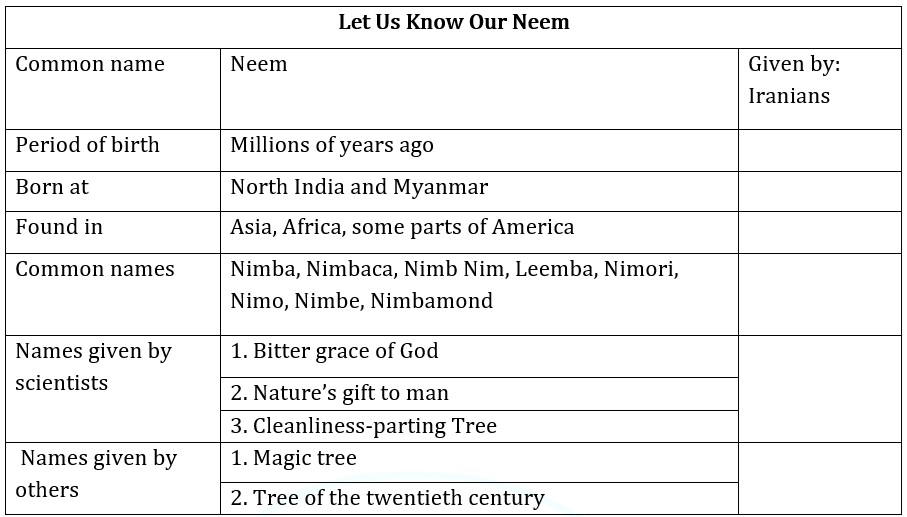
Let us discuss (Page 80)
1. How is neem useful to farmers?
Answer: Neem is useful to farmers because it acts as a natural pesticide. When neem seed powder mixed with water is sprayed on crops, it protects them from harmful insects like locusts and termites. It also prevents mosquito breeding in rice fields, improves crop yield and keeps the soil fertile.
2. Mention some of the uses of the neem tree.
Answer: Some uses of the neem tree are:
- Neem leaves are used in medicines and to protect clothes.
- Neem twigs are used to clean teeth.
- Neem oil is used in soaps and toothpaste.
- Neem seed powder is used to protect crops from insects.
- Neem trees purify the air.
Let us think and reflect (Page 81)
I. You just read about the Neem tree. Write any two facts that surprised you the most.
Answer: Two facts that surprised me the most about the Neem tree are:
- Neem seed powder stops mosquitoes from breeding in stagnant water.
- Furniture made of Neem wood cannot be attacked by termites.
II. Complete the following sentences. (Page 81)
Answer: (1) The old man asked Amber to call him Neem Baba because he was old and had known her since her childhood.
(2) Neem seed powder protects crops from locusts, termites, mosquitoes and other insects.
(3) Adding neem seed powder to stagnant water is a cost-effective method to stop mosquitoes from breeding in stagnant water.
(4) One reason why doctors advise us to use neem leaves for someone suffering from measles is that neem’s chemical properties help prevent germs from breeding and soothe itching.
III. Which parts of the neem tree are used to make medicines?
Answer: Neem leaves, bark, flowers, fruits and roots are all used to make medicines.
IV. Why is the story of the neem tree thought-provoking?
Answer: The story of the neem tree is thought-provoking because it shows how every part of neem is useful for health, farming, and daily life. It teaches us to value nature.
Let us learn (Page 81)
I. Study these words from the text.
Words: something, neem oil, cleanliness-parting, well known, grandmother, seed powder, childhood, well trained, thought-provoking
Put the compound words given above in their trees.
These words are known as compound words. There are three types of compound words, based on how the words are separated.
- Open compound words: spaces between the words.
- Closed compound words: no spaces between the words.
- Hyphenated compound words: hyphens between the words.
You may add some more words:
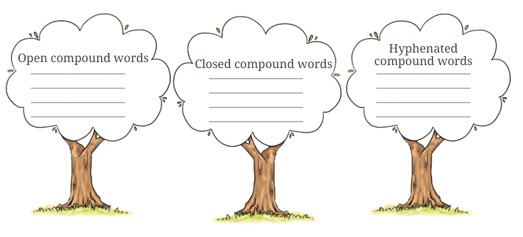
Answer:
| Type of Compound Word | Words |
| Open compound words | neem oil, well known, seed powder, well trained |
| Closed compound words | something, grandmother, childhood |
| Hyphenated compound words | cleanliness-parting, thought-provoking |
II. Words that tell us what a person is doing are called verbs. In the table given below, match the verbs in the first column showing action in the present to verbs in the second column showing action in the past. Make a sentence with any one form of the verb. One has been done for you. (Page 82)
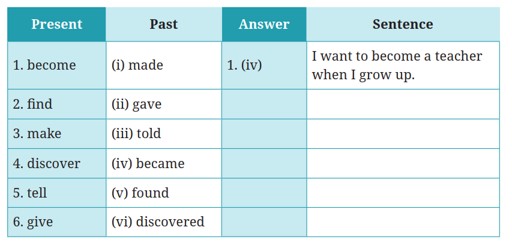
Answer:
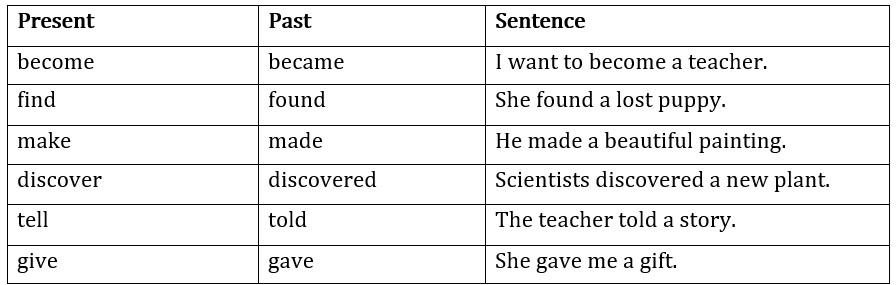
III. Amber speaks to Neem Baba as if speaking to a person. This figure of speech is called personification. Let us look at some more examples.
- The leaves whispered in the wind.
- The flowers danced merrily in the breeze.
Now, discuss it with your classmates and teacher
Answer: Personification means giving human qualities to things that are not human, like trees, leaves, flowers, or animals.
Examples:
- The leaves whispered in the wind. (Leaves cannot really whisper, but it feels like they are.)
- The flowers danced merrily in the breeze. (Flowers cannot dance, but when the wind blows, it looks like dancing.)
In the story, Amber speaks to the neem tree as if it were a person, calling it Neem Baba. That is also personification.
Let us listen (Page 83)
You will now listen to a boy speaking to his mother. As you listen, select the correct statements. (refer to page 101 for transcript)
(1) The mother was surprised to know that Peepal Baba had planted trees all over the country.
(2) The mother disliked the work being done by Peepal Baba.
(3) The mother wanted to know more about Peepal Baba.
(4) The boy decided to take care of trees by listening to Peepal Baba’s journey.
(5) The boy was worried about what his teacher had told him.
Answer: From the above conversation, the correct statements are:
1. The mother was surprised to know that Peepal Baba had planted trees all over the country.
3. The mother wanted to know more about Peepal Baba.
4. The boy decided to take care of trees by listening to Peepal Baba’s journey.
Let us speak (Page 83)
Collect dry leaves of four different trees and plants around you.
1. Make one card as given below. On the top, draw the shape of the leaf looking at the dry leaf and colour it. Inside the card, write the name of the tree/plant the leaf is taken from and one of its uses.
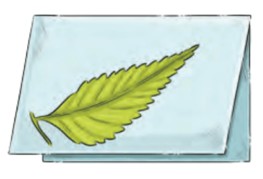
Answer:
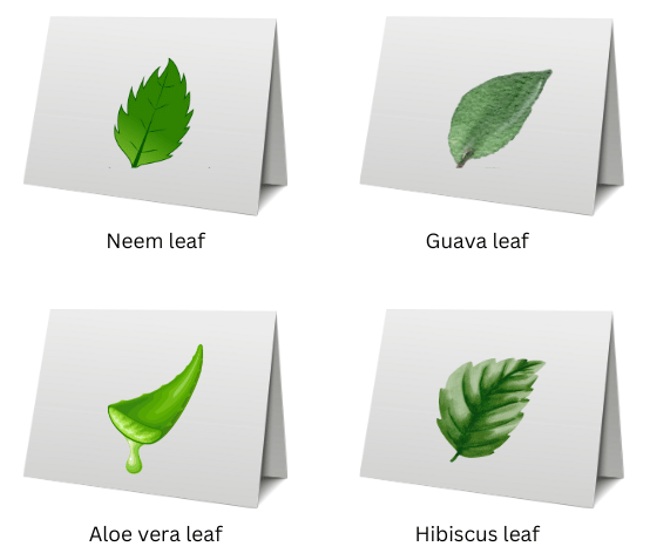
Neem Leaf: Used as a natural remedy for skin infections due to its antibacterial properties.
Guava leaf: Beneficial for gum health! Guava leaf extract has natural antibacterial, anti-inflammatory, and antimicrobial properties that can help reduce gum inflammation
Aloe vera: The gel inside is used to soothe skin irritations, burns, and can even be applied as a moisturizer.
Hibiscus: Used in hair care, as it helps condition the scalp and prevent dandruff.
2. Now, speak about the whole process of making the card in front of the class.
Answer: Do it yourself.
3. Ask your classmates to identify the leaf and tell them one of its uses. After they answer, open the card, and share what you have written.
Answer: Do it yourself.
Let us write (Page 84)
You have read about Neem Baba and learnt many things about the neem tree. Look at the trees in your neighbourhood and write a paragraph about any one tree that you like.
- Where it is (roadside / park, etc.)
- How it looks (height, tree trunk, leaves, flowers, etc.)
- Why you like it (shade, medicinal properties, shelter, beauty, etc.)
- Give a title to your paragraph.
Answer: The Mango Tree
Near my house, there is a big mango tree on the roadside. It is very tall with a thick trunk and wide branches full of green leaves. In summer, it has small yellow flowers and later it gives sweet, juicy mangoes. I like this tree because it gives cool shade to people and tasty fruits to eat. Birds also sit on its branches and sing. I feel happy whenever I see this tree.
Let us explore (Page 84)
When people from Persia came to India and saw that a common tree of their country was freely growing here, they started calling the tree Azad Darakhte Hindi. So, the scientific name of Neem in Latin became Azadirachta indica.
Neem has different names in the Indian languages. Discuss with your teacher and find out which Indian languages these names belong to.
Answer:

NCERT Solutions for Class 6 English Unit 3 Neem Baba
We hope these NCERT Solutions for Class 6 English Poorvi help students understand the story, revise its important lessons and prepare confidently for their examinations.
Neem Baba is an imaginative conversation between Amber and an old neem tree in her courtyard. One day, Amber returns from school and sits under the tree’s shade. She feels as if the tree is whispering to her and begins a conversation with it. The neem tree tells her about its ancient origins, different names and presence in many parts of the world. It also explains how its leaves, bark, flowers, fruits, roots and seeds are useful in medicines, farming and everyday life. Through this conversation, Amber discovers why the neem tree is considered a valuable gift of nature.