

NCERT Solutions for Class 7 Maths Ganita Prakash Part 1 Chapter 8 Working with Fractions provides detailed, step-by-step solutions to all the questions given in the NCERT Mathematics textbook. This chapter focuses on multiplication and division of fractions, simplifying fractions, understanding reciprocals, and applying fractional operations to solve mathematical problems. These Class 7 Maths Solutions cover all the Figure it Out exercises and important in-text questions.
Class 7 Maths Part 1 Chapter 8 Working with Fractions NCERT Solutions
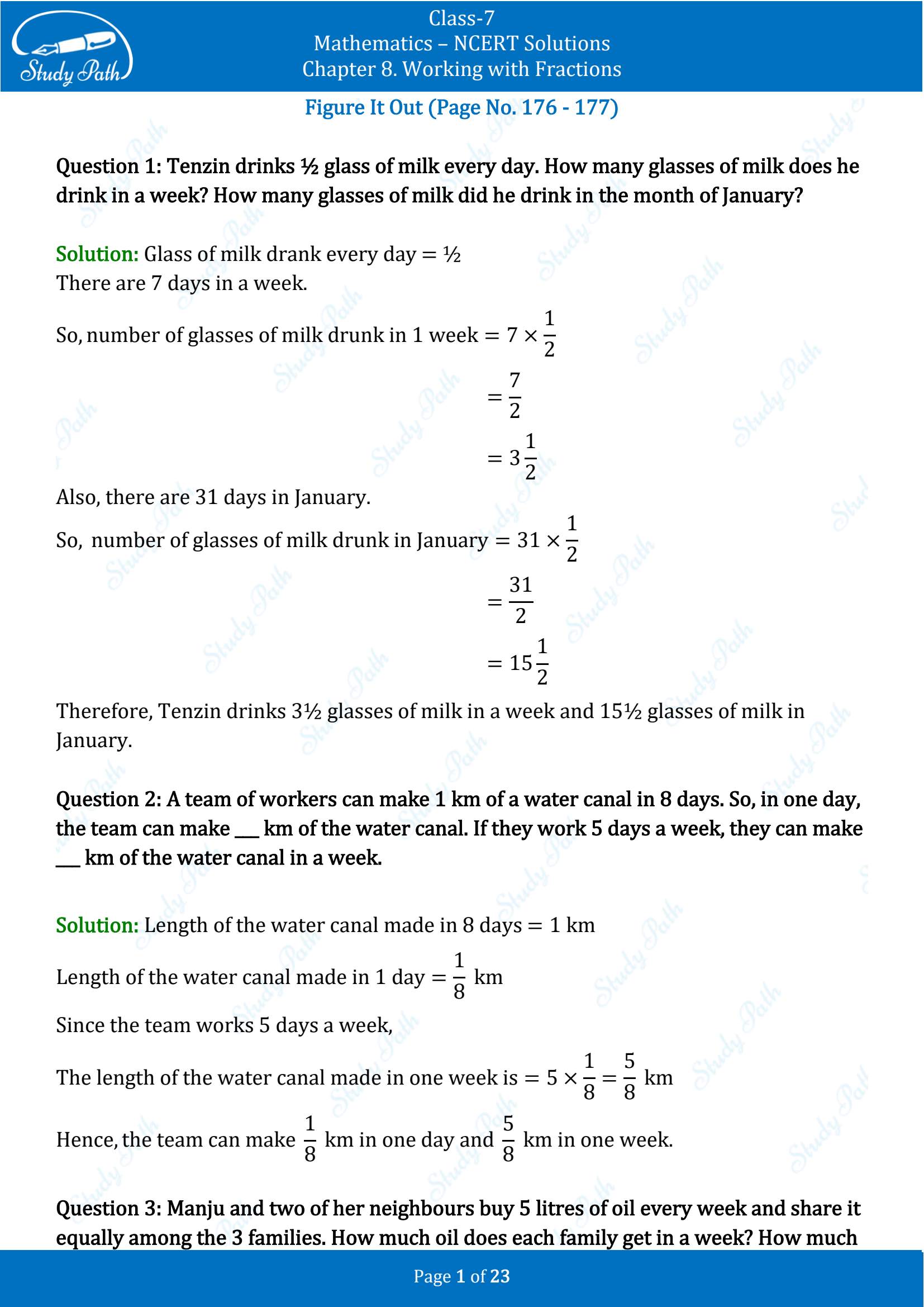
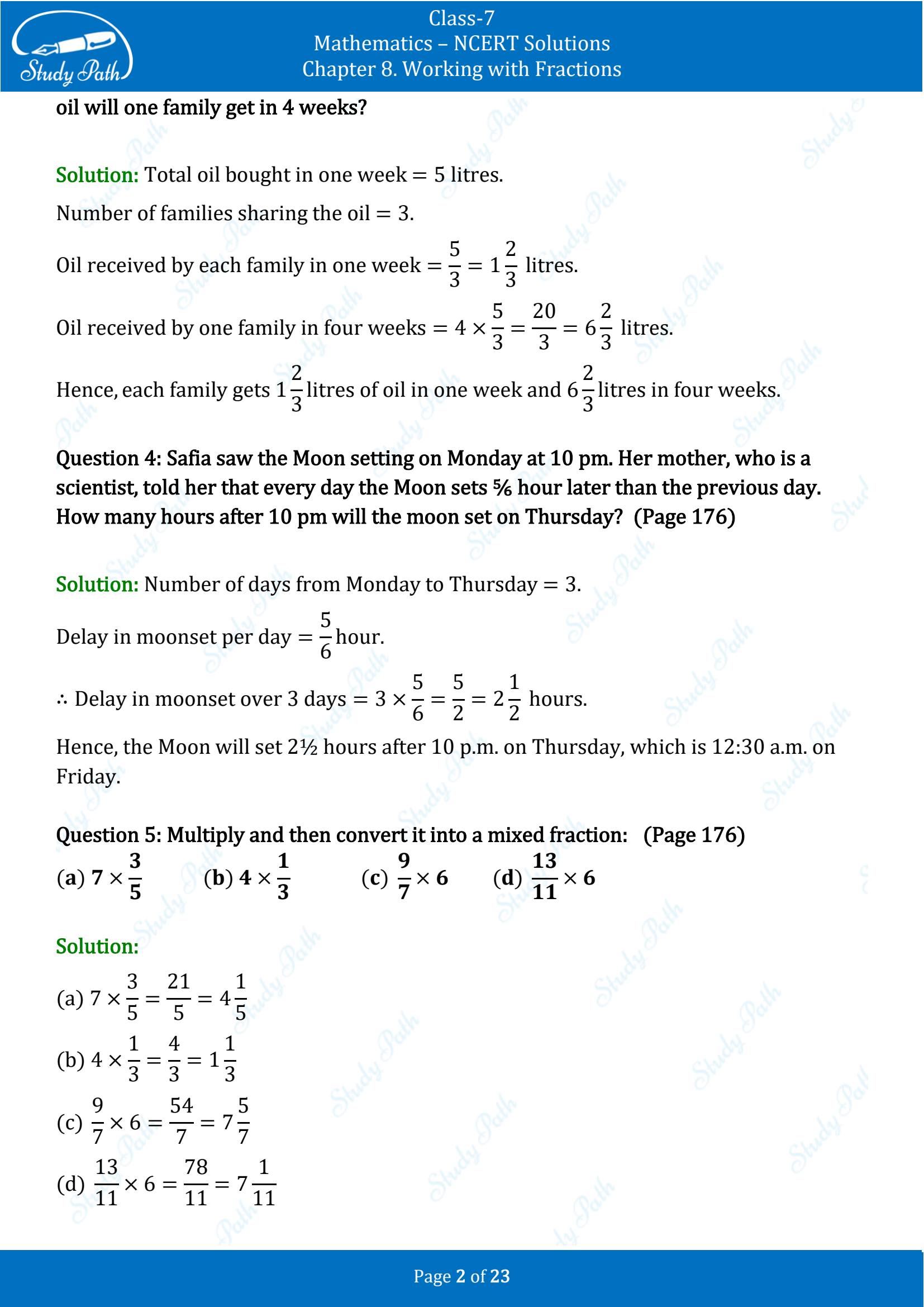
Class 7 Maths Part 1 Chapter 8 NCERT Questions and Answers
Chapter 8, Working with Fractions, extends students’ understanding of fractions by introducing multiplication and division of fractional numbers. Students learn how to multiply a fraction by a whole number, calculate the product of two fractions, and divide fractions using reciprocals. The chapter also explores visual methods of understanding fractional multiplication and practical applications of fractions in everyday situations.
The chapter is divided into three main sections:
- 8.1 Multiplication of Fractions: Learning to multiply fractions by whole numbers and other fractions, representing fractional products using unit squares, simplifying fractions by cancelling common factors, and understanding the properties of multiplication.
- 8.2 Division of Fractions: Understanding the relationship between multiplication and division, finding reciprocals, and learning how to divide fractions by multiplying by the reciprocal of the divisor.
- 8.3 Some Problems Involving Fractions: Applying multiplication and division of fractions to solve word problems involving measurements, quantities, areas, and fractional relationships.
Important Concepts in Class 7 Maths Chapter 8 Working with Fractions
The important concepts covered in this chapter include:
- Multiplication of a Whole Number and a Fraction: Multiplying the numerator of a fraction by the whole number while keeping the denominator unchanged.
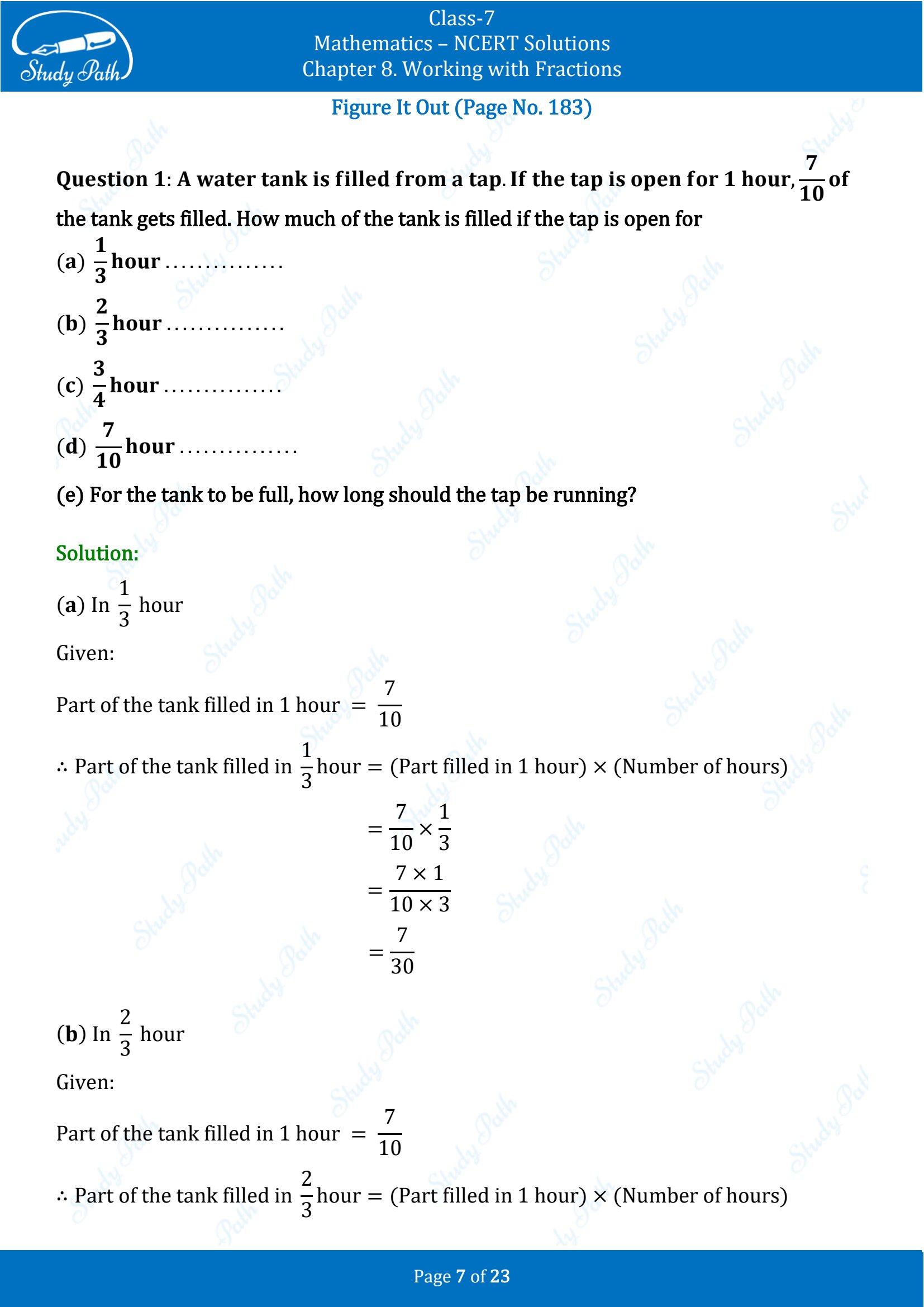
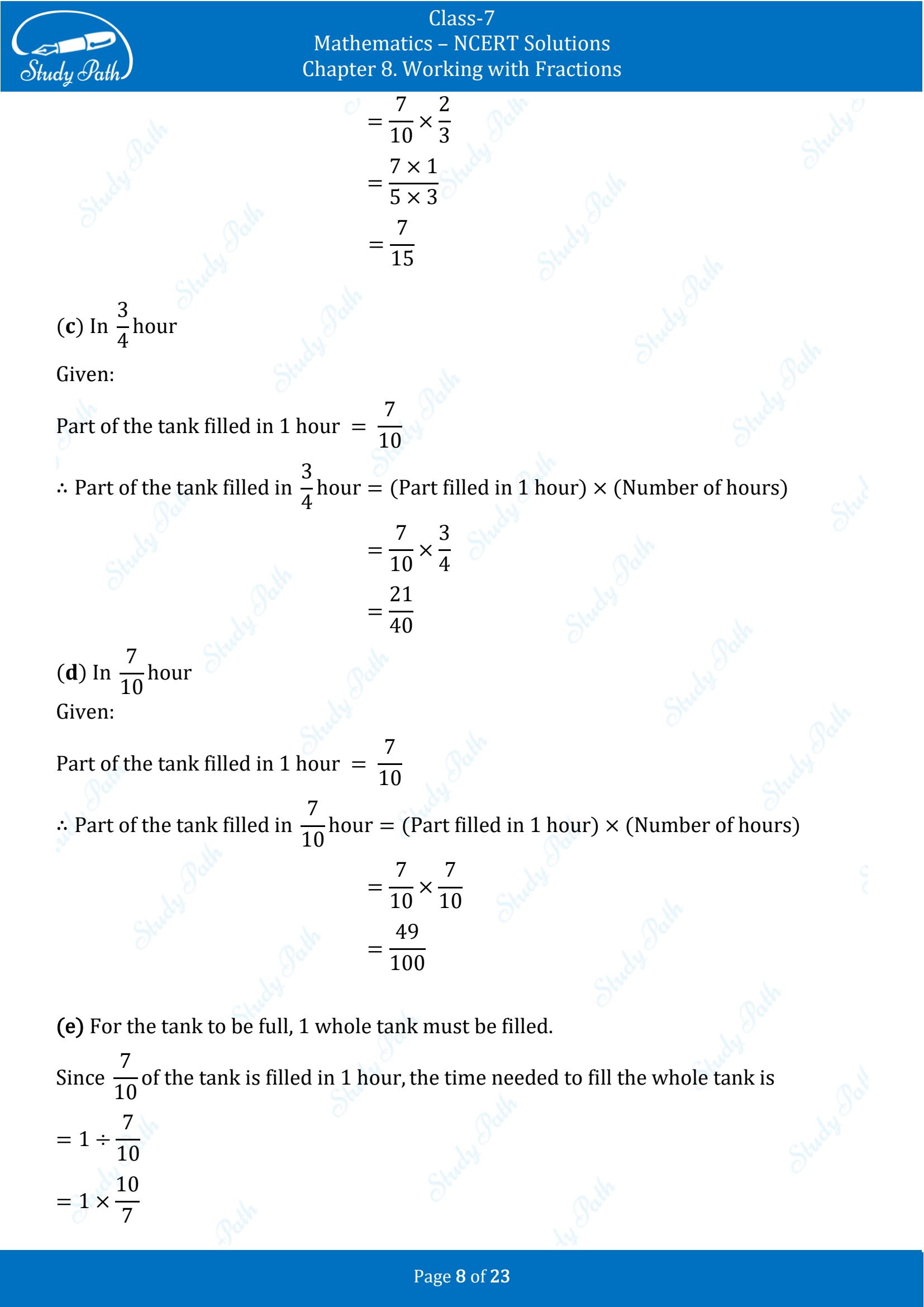
- Multiplication of Two Fractions: Multiplying the numerators together and the denominators together to find the product.
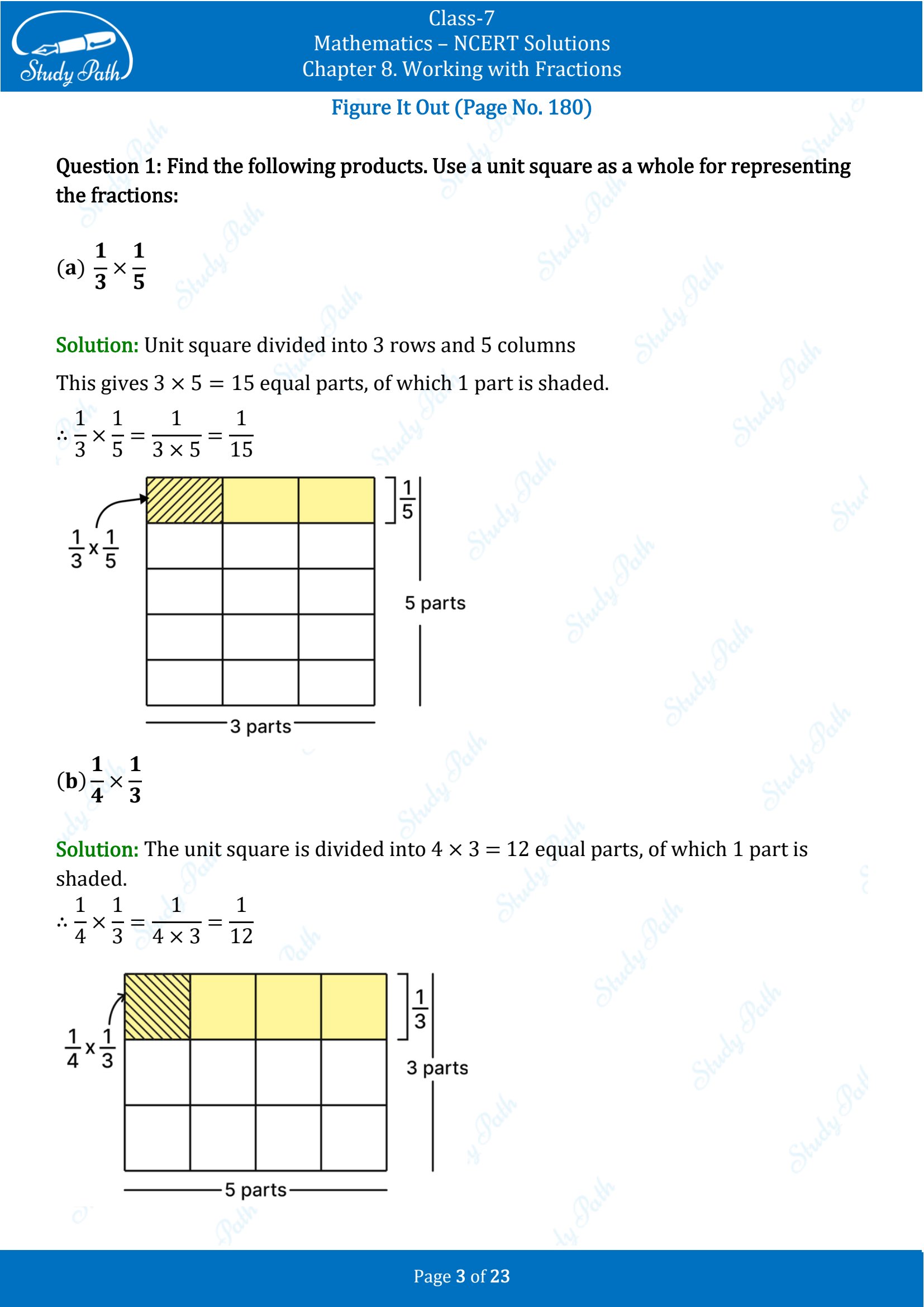
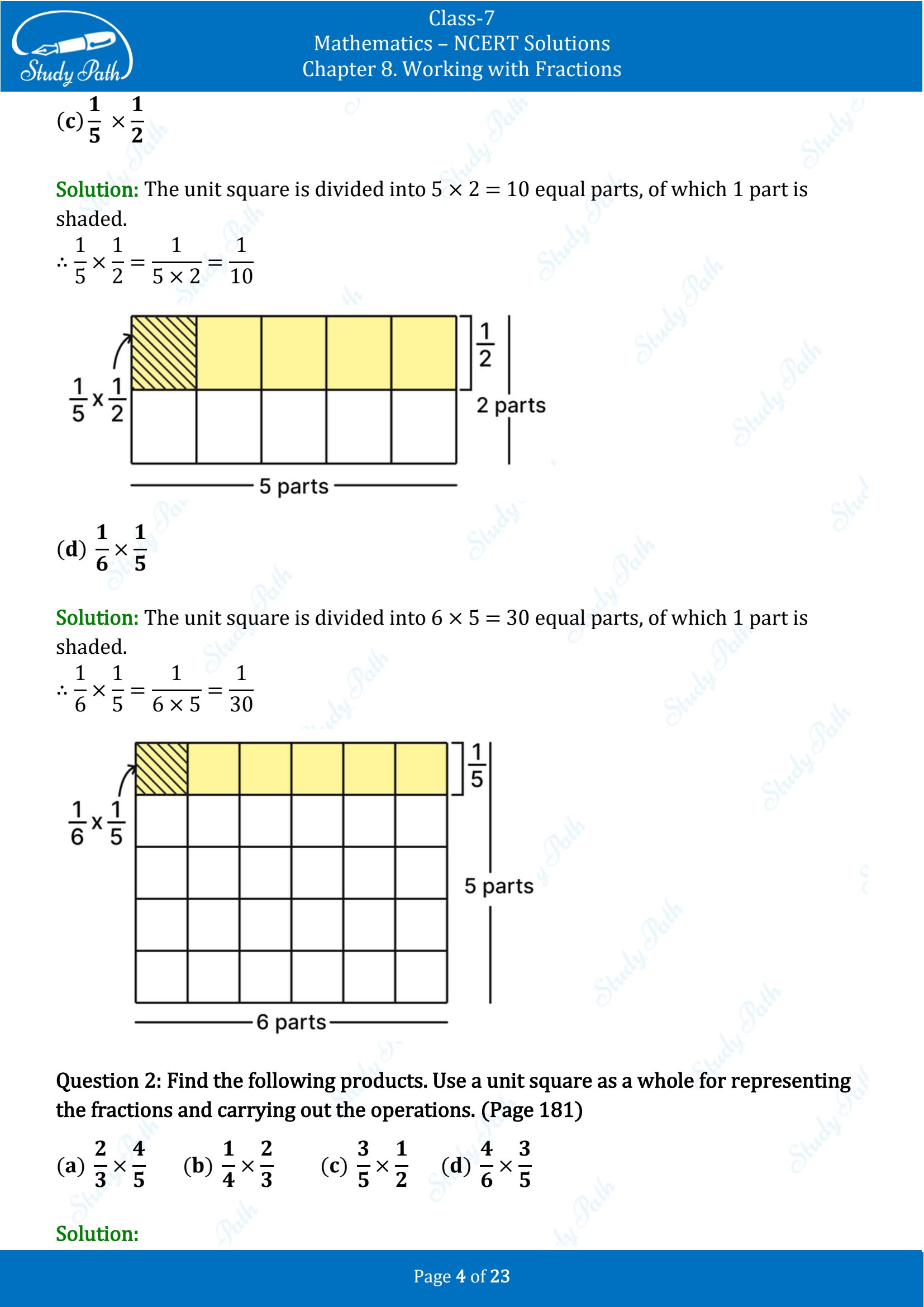
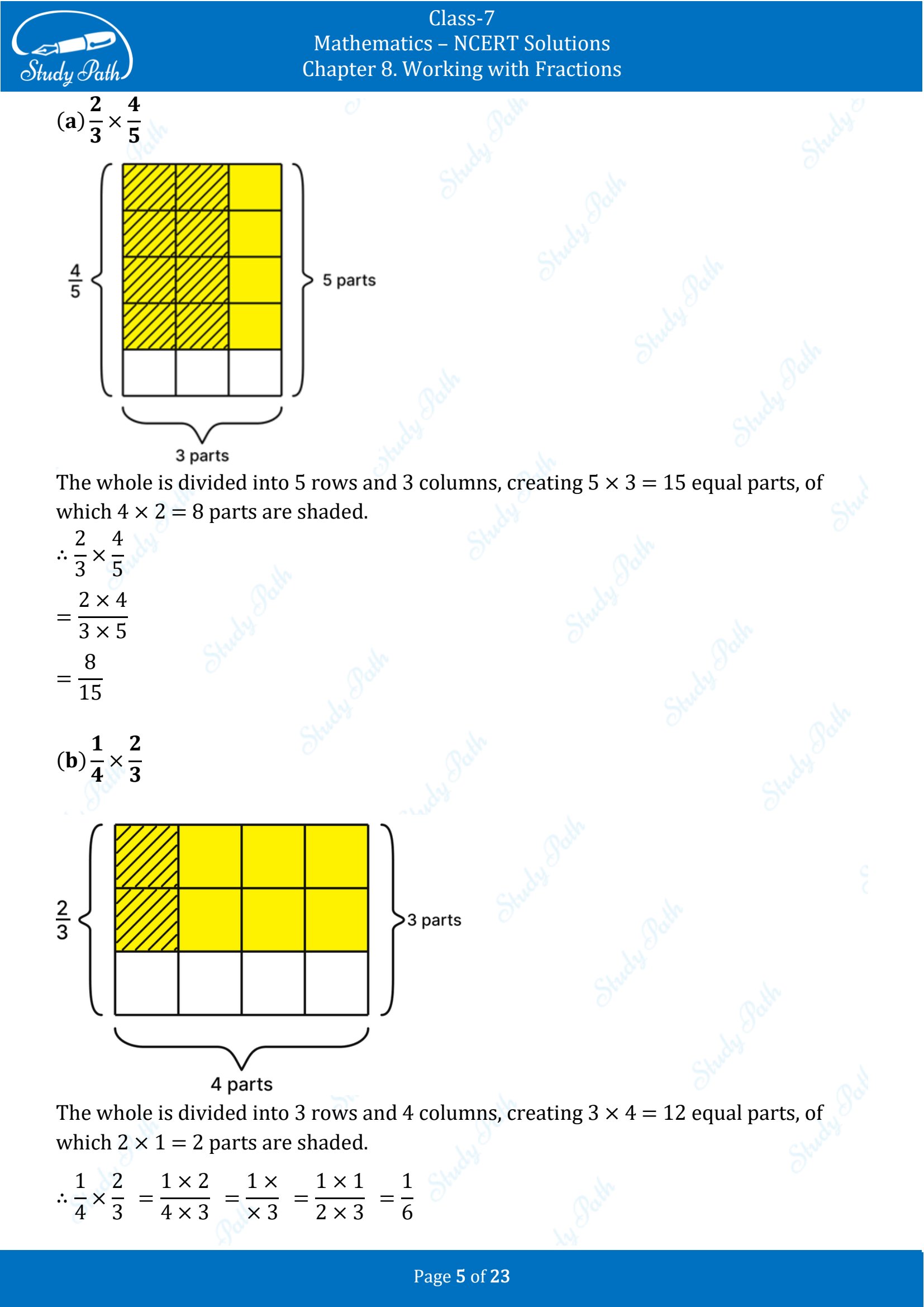
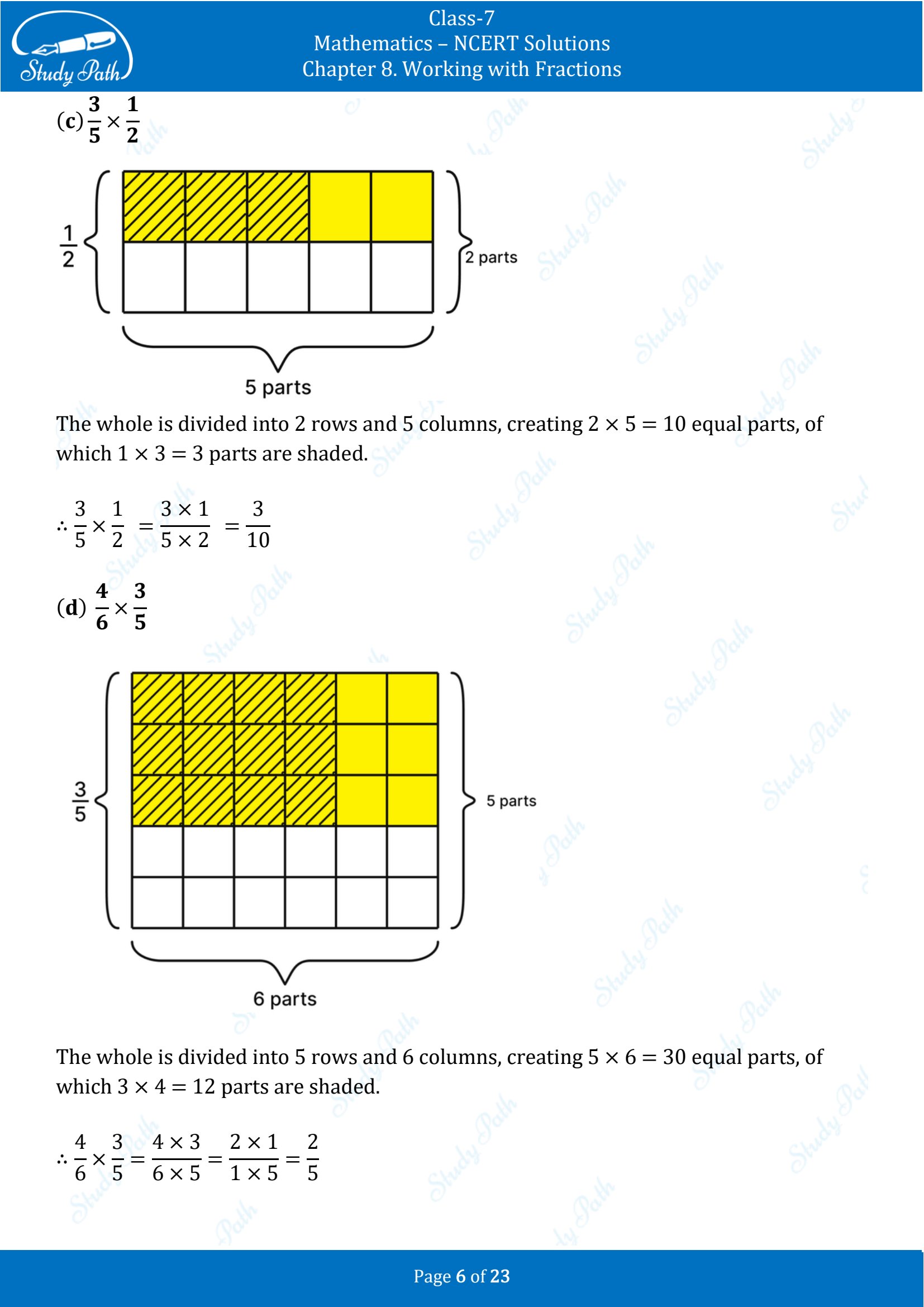
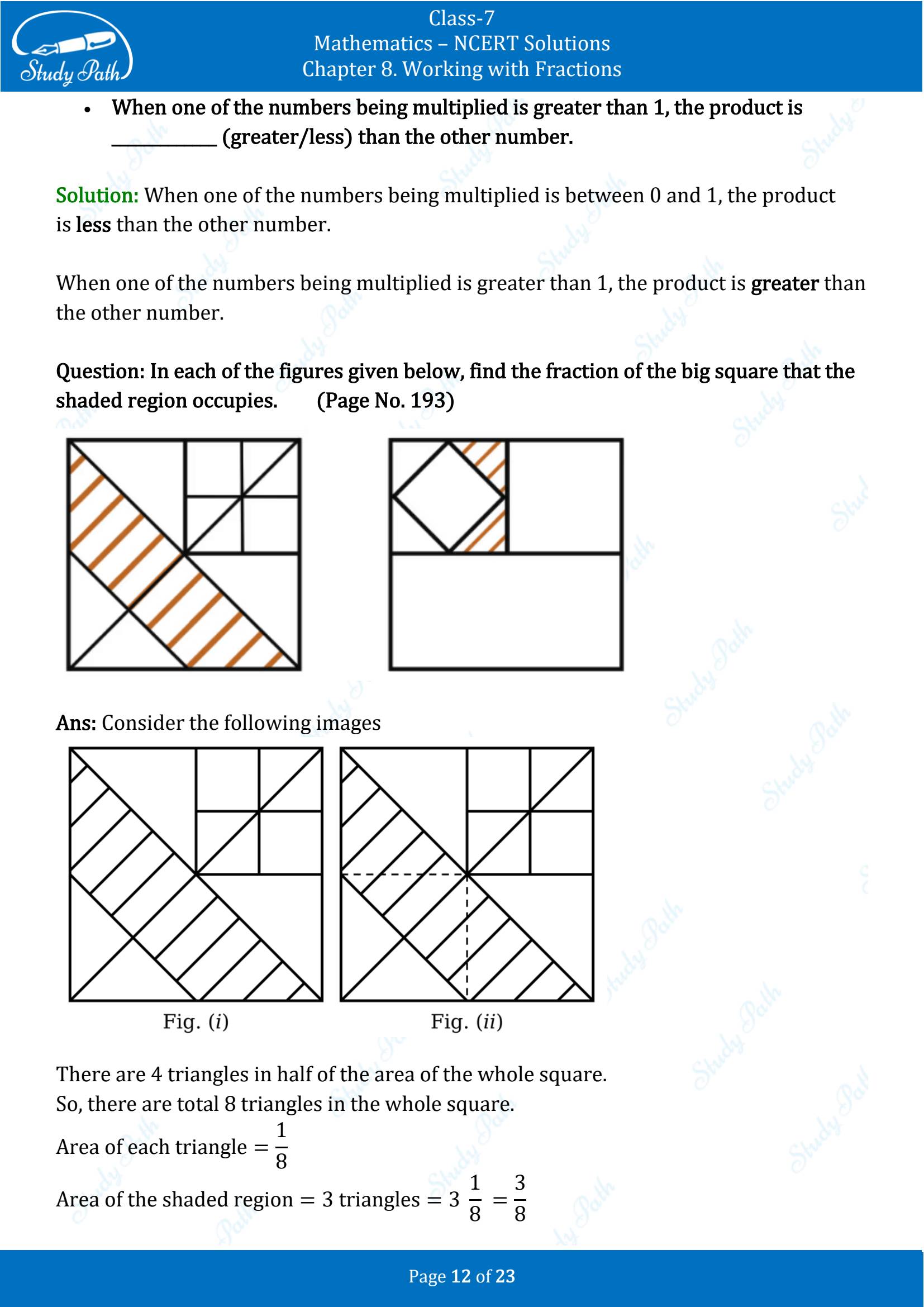
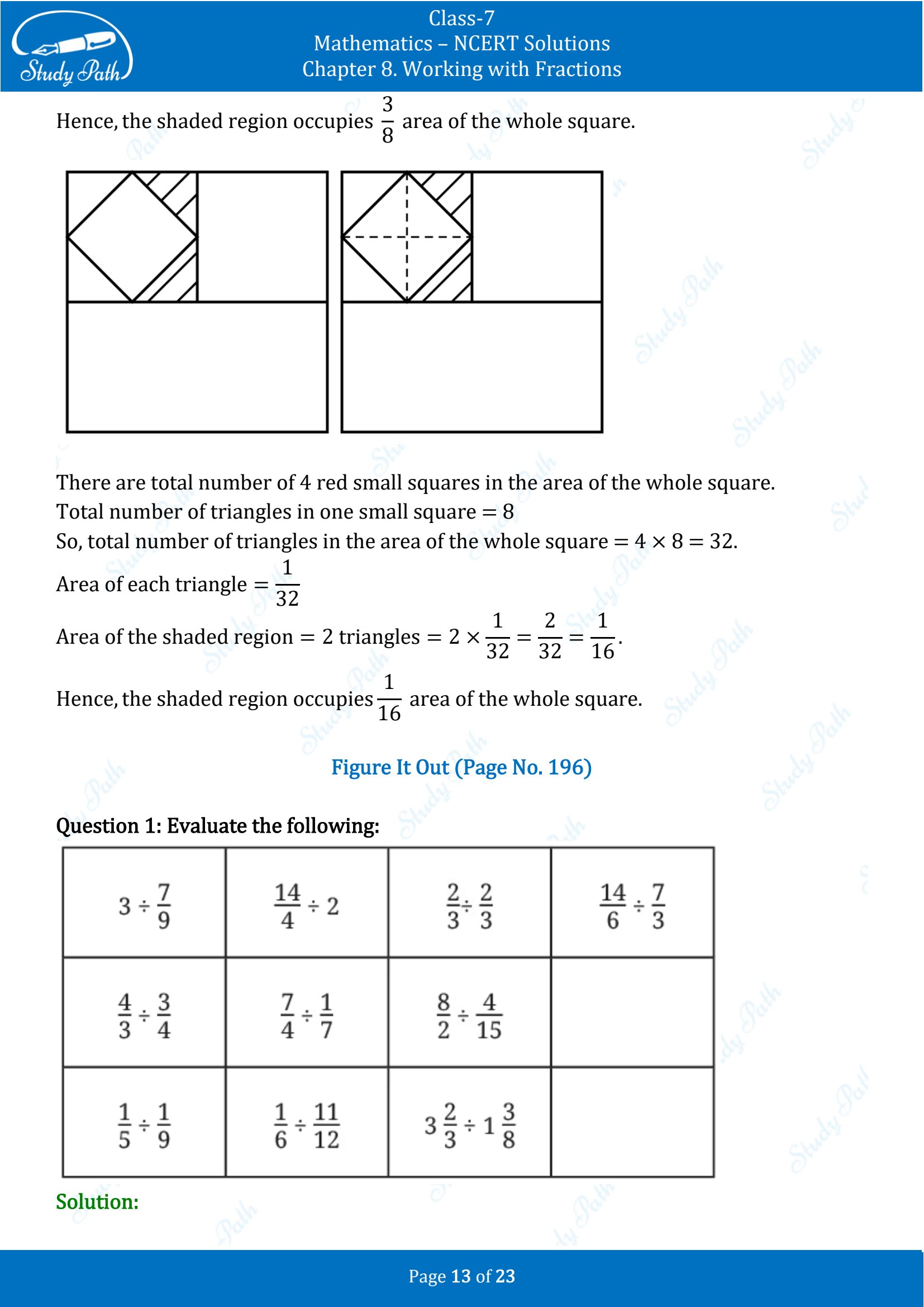
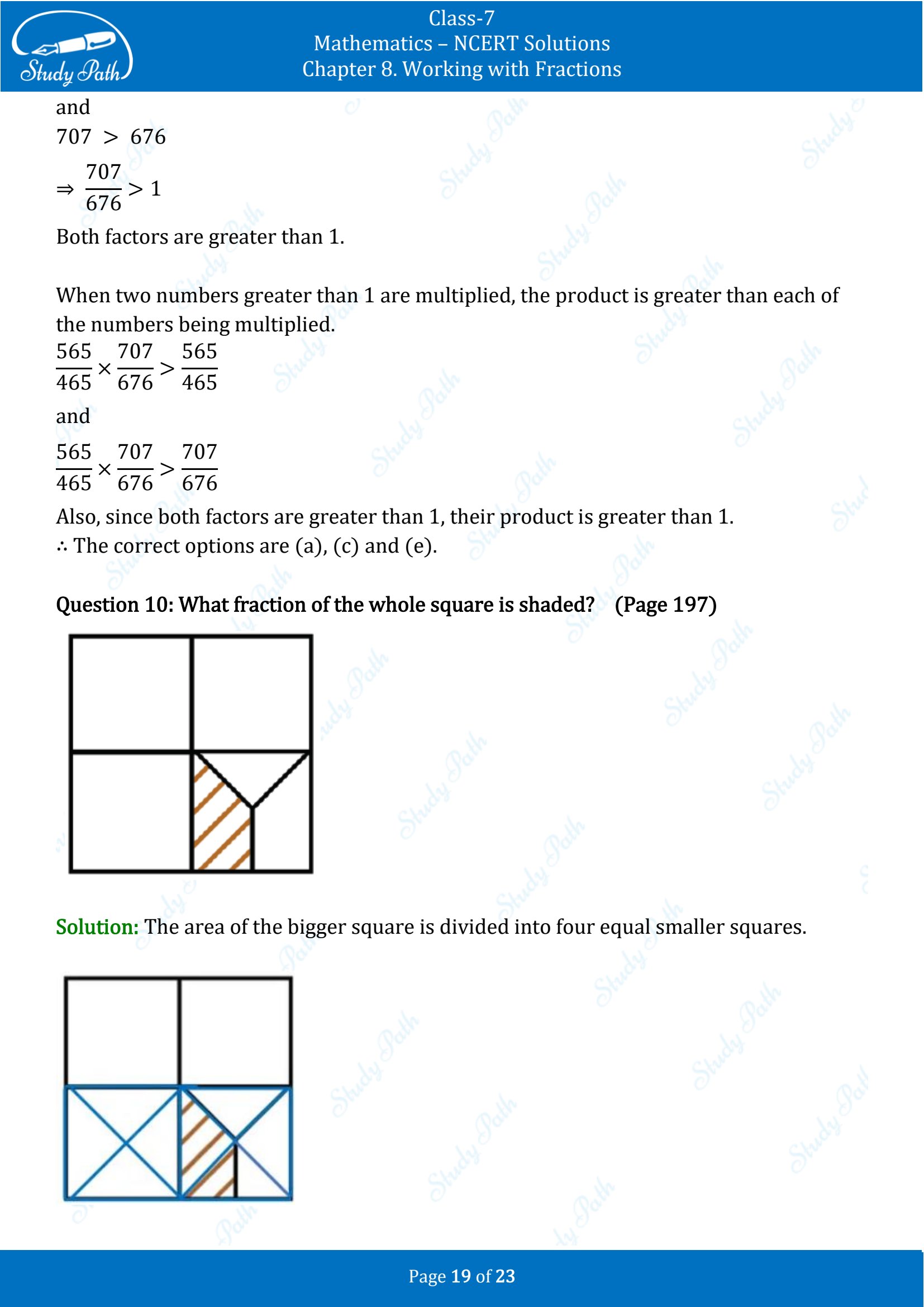
- Fractional Multiplication Using Unit Squares: Using diagrams and shaded regions to understand the product of two fractions.
- Simplification of Fractions: Cancelling common factors from numerators and denominators to express fractions in their lowest terms.
- Reciprocal of a Fraction: Finding the multiplicative inverse of a non-zero fraction by interchanging its numerator and denominator.
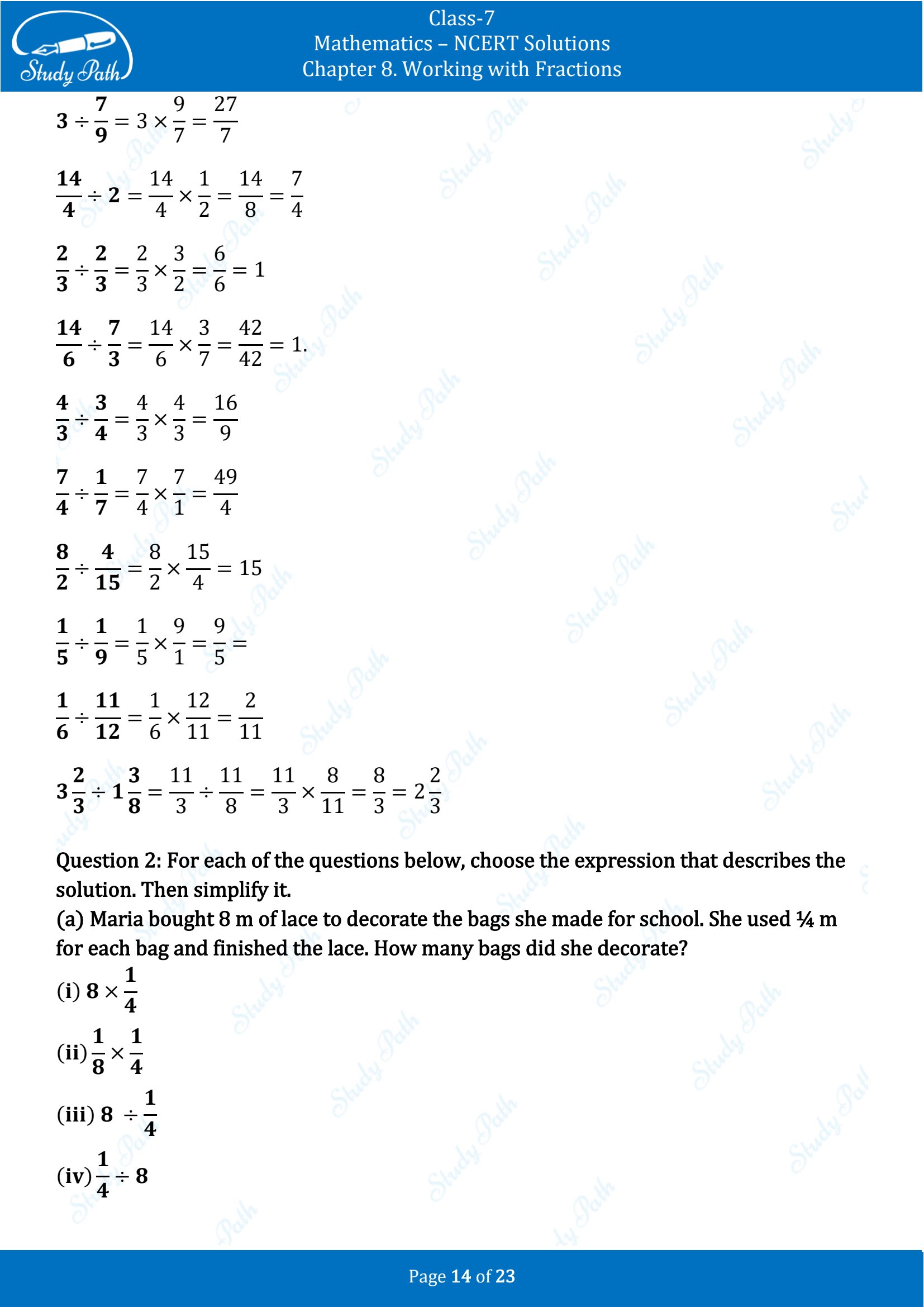
- Division of Fractions: Dividing one fraction by another by multiplying the dividend by the reciprocal of the divisor.
- Properties of Fraction Multiplication: Understanding that the order of multiplication does not change the product and that multiplying by a fraction less than 1 reduces a positive quantity.
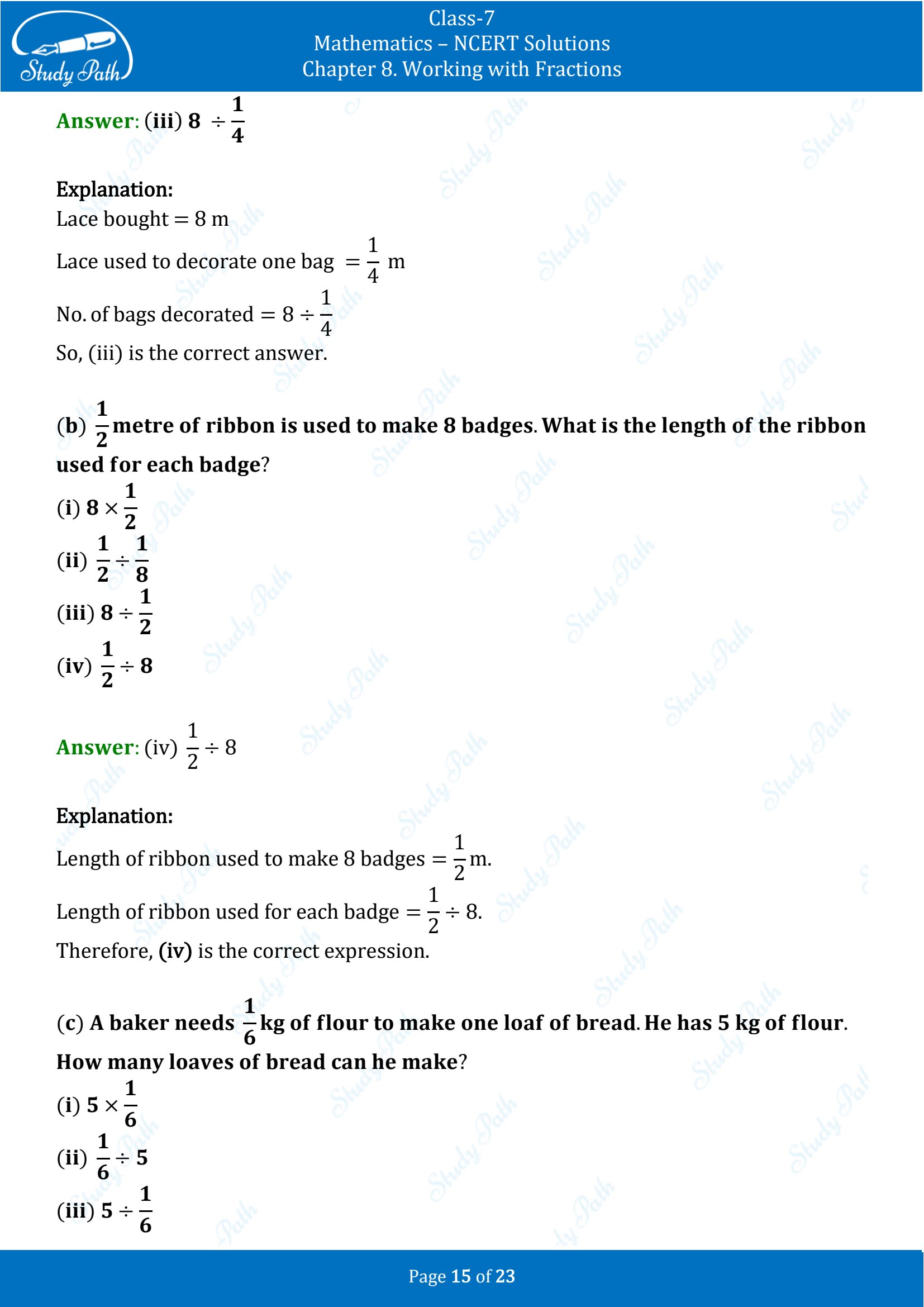
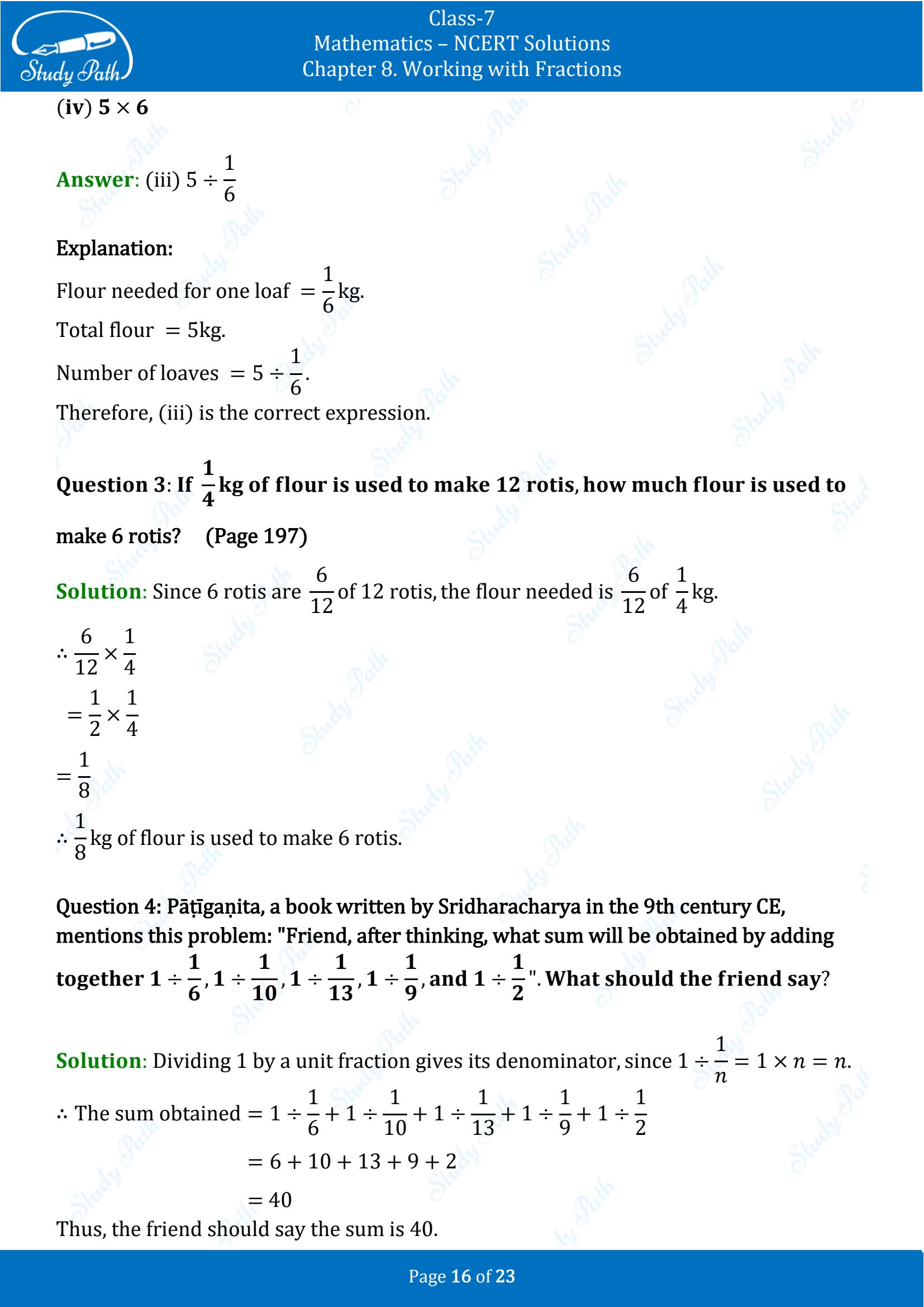
- Applications of Fractions: Solving mathematical problems involving distances, measurements, areas, sharing quantities, and other everyday situations.